

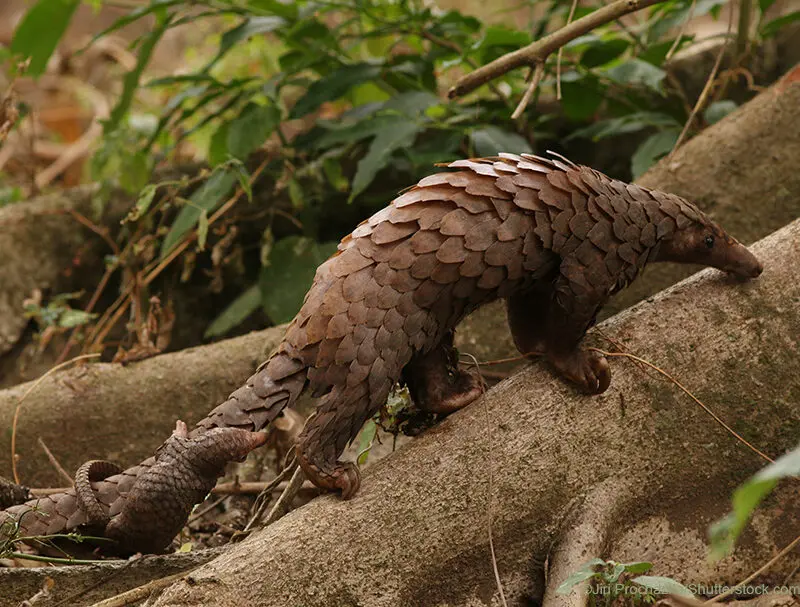
Conservationists are celebrating a roadmap, to protect pangolins in West Africa, for the next 30 years.
The West Africa Regional Pangolin Conservation Action Plan (2026–2056), is expected to protect the most vulnerable pangolin in the world, the White-Bellied Pangolin.
It is believed to be the single most heavily trafficked wild mammal in the world.
The plan was first presented at the 20th Conference of the Parties to the CITES Convention (CITES CoP20) in Samarkand, Uzbekistan, marking the very first regional action to protect African pangolin species.
West Africa is home to three of the world’s eight pangolin species -The White-Bellied Pangolin (Phataginus tricuspis), Black-Bellied Pangolin (Phataginus tetradactyla), and Giant Pangolin (Smutsia gigantea).
All three species are listed as Threatened on the IUCN Red List, and they are declining due to habitat loss and international wildlife trafficking.
Dr Matthew H. Shirley, PSG Co-Chair, said “this action plan is the result of unprecedented collaboration across borders, sectors, and disciplines. It provides a clear, evidence-based, and innovative roadmap to secure the future of West Africa’s three pangolin species over the next 30 years.”
The Action Plan is organised around six major threats and intervention categories, within which 16 goals were identified to achieve conservation targets.
Shirley also said “the roadmap was developed through a collaborative effort involving the PSG, the United States Agency for International Development (USAID), and Fauna & Flora. It was shaped through a participatory workshop held in Accra, Ghana, in March 2023, bringing together 85 stakeholders from government agencies, NGOs, wildlife rescue and rehabilitation centres, and research institutions across eight West African pangolin range states, as well as Cameroon and Gabon.”
Picture of the most trafficked pangolin in the world- White-Bellied Pangolin, Wildland Trust.