


July was a month of weather extremes, according to the World Meteorological Organisation (WMO).
This was informed by record ocean temperatures, extreme heat, drought, wildfires and flooding.
The WMO also said July was the 2nd warmest July on record, tied with July 2024, at 1.47°C above the pre-industrial average.
Western Europe experienced its hottest June–July period on record, facing 4 heatwaves since May, according to Copernicus EU Climate Change Service.
Global sea surface temperatures were the hottest ever recorded for July.
Exceptionally high temperatures are affecting the tropical Pacific, where El Niño is strengthening.
Moreover, dry conditions intensified across Western Europe, with major rivers at low flows, including the Seine, Rhine and Danube.
Drier-than-average conditions were also reported across parts of North America, Africa, Asia and South America.
Western Europe had wildfires, with significant ones reporting along the western parts of the United States and Canada.
Another extreme event was the monsoon rains which caused extensive flooding across parts of West Africa and South and Southeast Asia.
India and several other countries are facing heightened risks of flash floods and landslides.
Typhoon Dolphin, an unusually long-lasting typhoon that formed in late July, prompted mass evacuations and emergency response efforts in China ahead of its 7 August landfall.
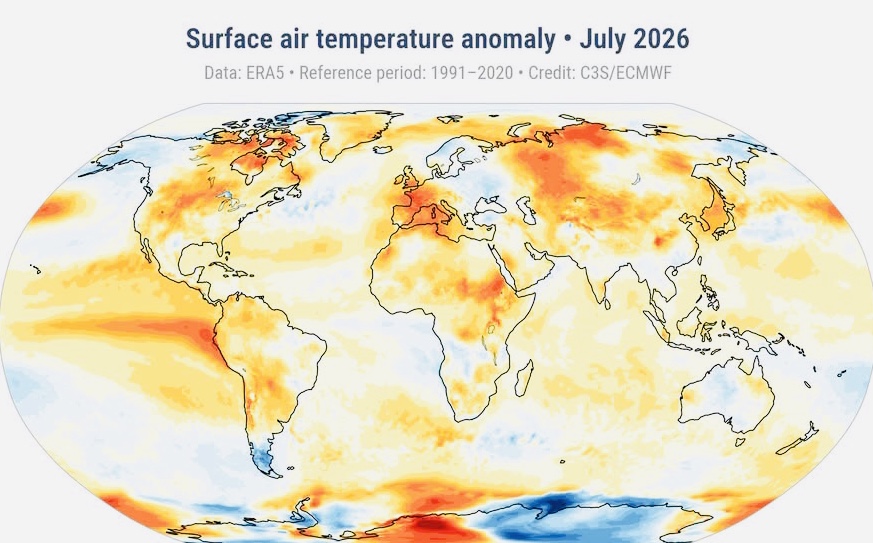
Map: World Meteorological Organisation (WMO).