

Cannibal Recycling has about 3,000 registered waste pickers and bakkie collectors on its database.
The company is Nelson Mandela Bay’s largest recycling buy-back centre, with a new production line capable of processing 100 tonnes of plastic packaging per month.
This is up from an average of 40 to 50 tonnes of plastics a month.
This is thanks to a partnership with the Sustainable Seas Trust (SST) funded by the Alliance to End Plastic Waste (AEPW).
Operation Clean Spot is managed by the Sustainable Seas Trust.
Through this partnership, the organisations plan to address the value chain from land to sea, linking every collector on the chain to a buyer who can take their material.
Janine Osborne, SST chief executive officer said the launch of the new line is an important milestone, not just for Cannibal, but for the development of a more inclusive and effective plastics recycling value chain in that province.
“Cannibal’s new line is the recycling end of Operation Clean Spot, our model for stopping plastic on its way to the sea. Operation Clean Spot gets households, schools and churches separating their waste, and links the collectors who pick it up to a buy-back centre. But it only works if there is a recycler at the end of the chain with the capacity to take what arrives. That is the gap this line fills” said Osborne.
Moreover, the amount of plastic waste going to landfill will be reduced significantly.
Kirchlin Simhadri, AEPW senior advisor, agrees that this model has worked well in the rest of the world.
“Alliance had learned from its work around the world, that plastic waste was fundamentally a systems challenge. You can’t just look at plastics alone. So, no single organisation or intervention can solve it alone.”
The plan is to connect collectors, communities, buy-back centres, municipalities and markets for the recycled material.
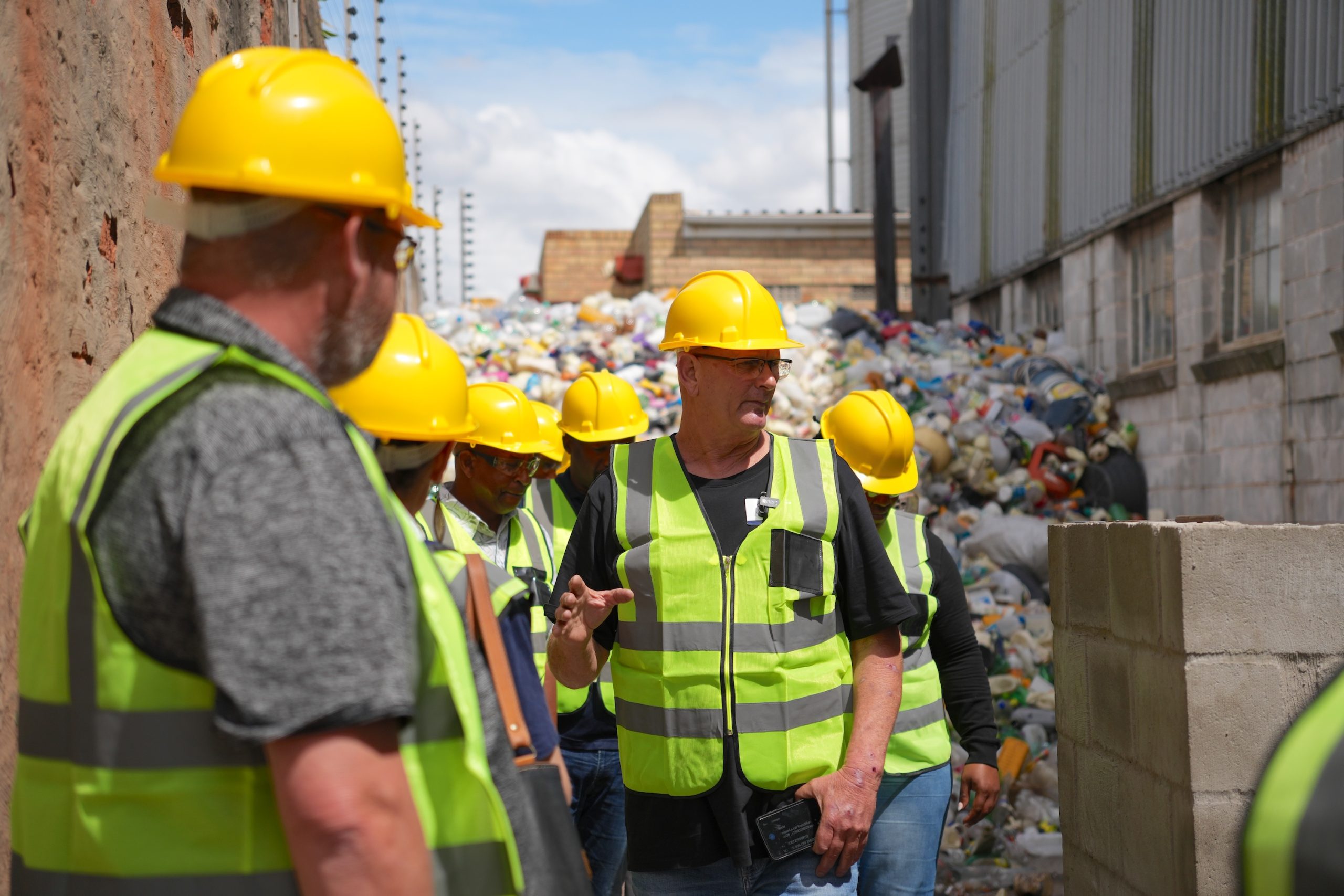
Picture of Leon van der Watt, director of Cannibal Recycling, by John Harvey.