

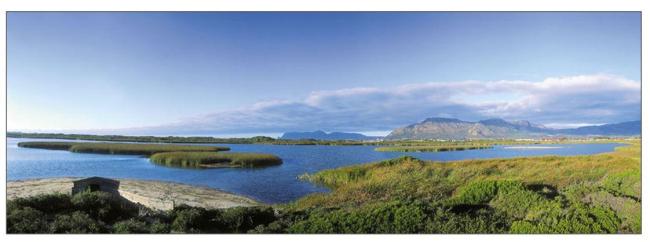
South Africa has over 300,000 individual wetlands.
Of these, 30 are wetlands of global significance because of their diversity in plant and animal life- “Ramsar sites.”
A report released in 2024, found an estimated 15% of South Africa’s wetlands, enjoy protection, while over 80% are poorly managed.
KwaZulu-Natal (KZN) has wetlands covering about 480,000 hectares, while the Western Cape has the highest number of individual sites (11).
Big well -known wetlands are the St Lucia System, Blesbokspruit, De Hoop Vlei, and De Berg Nature Reserve.
They are considered the most threatened habitat type in South Africa, with 65% of wetland ecosystem types classified as threatened (48% critically endangered, 12% endangered, and 5% vulnerable).
Major threats have come from agriculture, mining, pollution, and, draining to develop.
Narend Singh, the Deputy Minister of Forestry, Fisheries and the Environment, in partnership with the City of Cape Town, will define the role of traditional knowledge and community-led action in protecting wetlands, with a focus on the work of the City’s River Wardens in safeguarding these vital ecosystems.
The main ceremony, is expected to kick off at the False Bay Nature Reserve, a RAMSAR site.
Karen Shippey, Chief Director, Environmental Sustainability, in the Western Cape, said “wetlands are not wastelands – they are strategic natural assets. In the Western Cape, healthy wetlands are essential for climate resilience, disaster risk reduction, and long-term water security. Protecting these ecosystems is an investment in the wellbeing of both people and nature. Wetlands have an important job and are working hard for us – protecting and supporting resources and spaces we use daily. We need to work together to protect them and allow them to fulfill their natural functions.”
Picture: Ramsar