

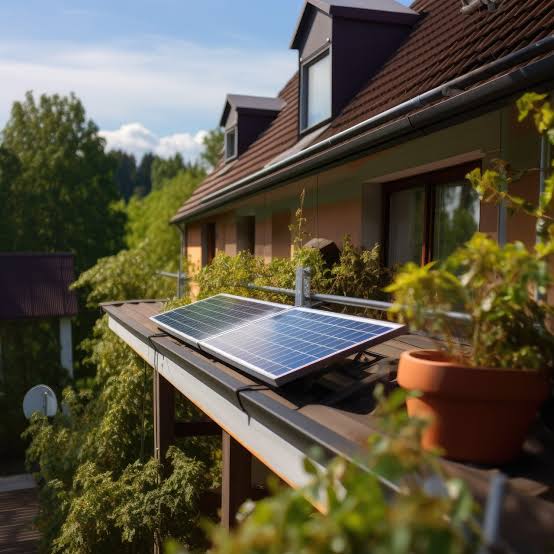
The Organisation Undoing Tax Abuse (OUTA) has sharply criticized the decision by Eskom and some municipalities to fine or disconnect electricity supply for failing to register small-scale embedded generation (SSEG) systems (Solar PV).
The organisation has called this “impractical, irrational and unfair.”
Wayne Duvenage, Chief Executive Officer at OUTA, said there are significant amendments to earlier supposed requirements and deadlines by the authorities, which is generating uncertainty and ambiguity on their demands to households with solar installations.
“OUTA has received a surge of queries and concerns from the public, following threatening communications from Eskom and certain municipalities, including the City of Johannesburg, demanding registration or prior approval for SSEG installations under 100 kW, which do not feed electricity back into the grid.”
Duvenage continued to say what is at stake here, are the rights of citizens who have gone to significant personal expense to protect themselves against years of escalating electricity prices and an unreliable power supply.
“People have installed gas appliances, solar power systems, generators, inverters and other alternatives, in direct response to Eskom and Government’s calls – as well as incentives – to reduce electricity demand.”
OUTA has also cautioned finance houses and insurers against refusing to fund or insure residential solar installations based on this confusion and frequent amendments.
The South African Photovoltaic Industry Association (SAPVIA) called for constructive dialogue on solar system registrations.
Dr Rethabile Melamu, CEO of SAPVIA, said the position of the organisation is clear “the SSEG registration is a legal and safety requirement, critical to protecting households, technical workers and grid stability.
Punitive approaches and threats are counterproductive and undermine long-term compliance and the Registration processes must be efficient, transparent and user-friendly, with distributors held to the same standard of accountability.”
She also said in a statement, “we welcome recent progress in simplifying registration requirements and fee waivers for smaller systems, and we will continue advocating for collaboration over confrontation. A safe, stable and trusted grid is a shared responsibility and constructive dialogue is the only way forward.”
On Monday, the National Energy Regulator of South Africa (NERSA) said it notes public commentary following an article published by the Organisation Undoing Tax Abuse (OUTA) on 27 January 2026 regarding the registration of residential solar and other small-scale embedded generation (SSEG) installations.
Charles Hlebela, Spokesperson of NERSA, said according to the Electricity Regulation Act of 2006 (as amended), read with the Exemption and Registration Notice, the requirement to register an embedded generation facility is determined by whether the installation has a point of connection to the electricity grid and its installed capacity, and not by whether electricity is exported to the grid or consumed on site.
“Small-scale embedded generation facilities with an installed capacity of 100kW or less and with a point of connection to the electricity grid are required to register with the relevant distributor, being Eskom or the applicable licensed municipality.
Embedded generation facilities with an installed capacity of more than 100 kW and a point of connection to the grid are required to register directly with NERSA.”
Embedded generation facilities without a point of connection to the electricity grid are exempt from registration requirements.
Picture: Lifestyle Solar