

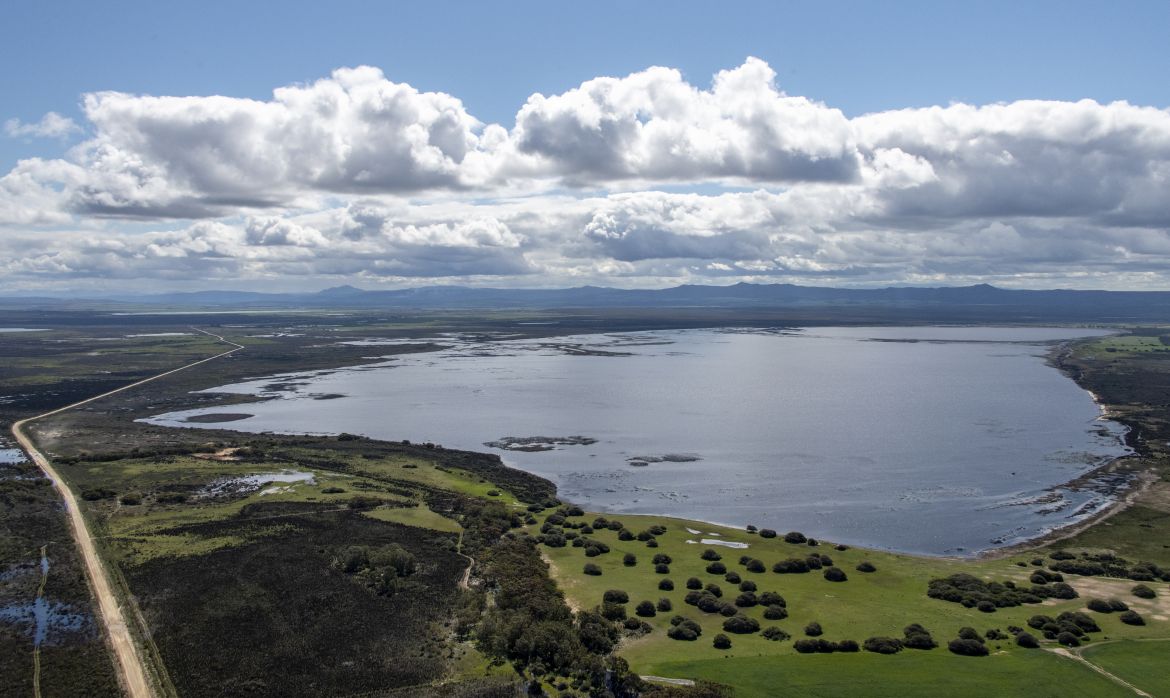
Agulhas Plain is South Africa’s 32nd wetland to be declared a RAMSAR Site.
Narend Singh, the Deputy Minister of Forestry, Fisheries and the Environment (DAFF) announced the news at a Wetlands event, at False Bay Nature Reserve, on Monday.
Government leaders, community custodians and conservation practitioners reflected on the value of wetlands and those who depend on them.
“We proudly mark the designation of the Agulhas Plain as our country’s 32nd RAMSAR Site…strengthening South Africa’s contribution to global wetland conservation” said Singh.
He also said wetlands are far more than physical landscapes.
The wetland has ecological significance because it is situated on an ancient wave-cut platform where the Atlantic and Indian Oceans converge.
The result is a second-largest freshwater lake in South Africa, and floodplains, salt pans, marshes, river systems and estuarine environments.
The site supports an estimated 960 plants, 144 bird, 68 mammal, 33 amphibian and eight (8) fish species.
Many of these are endemic to the area.
Threatened animal species found there, include the critically endangered Rose’s mountain toadlet (Capensibufo rosei) and cape flats frog (Microbatrachella capensis), as well as the endangered maccoa duck (Oxyura maccoa).
Threatened plants include the limestone pagoda (Mimetes saxatilis) and the bigflower capegorse (Aspalathus macrantha).
The wetland is pressured by agricultural land uses and development.
Picture: Jean Tresfon