

This article was written and originally published by the Landmark Foundation.
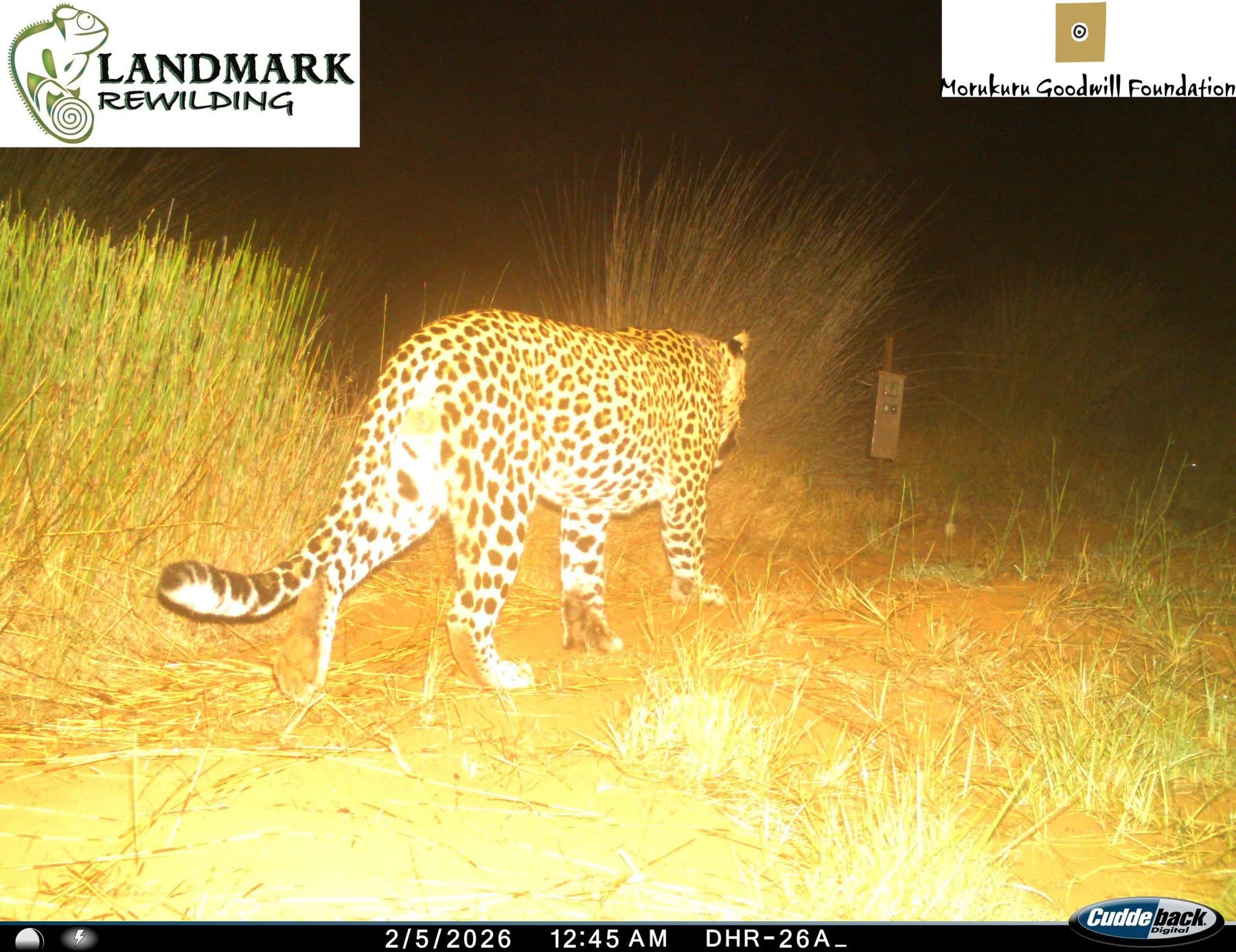
A survey using trap cameras by the Landmark Foundation, at the De Hoop Nature Reserve, near Swellendam, uncovered the presence of two male leopards left in the area.
This is down by four leopards, from a previous survey, between 2012 and 2014.
The survey continues, with the hope to discover more. Thus far, it has uncovered different wildlife species in the area.
Researchers are fascinated to have found leopards in the area, which were historically persecuted in the southern extreme, for centuries.
In colonial times, bounties were put out on their lives, together with state funded extermination practices which included the provision of traps, hunting dogs, poisons, and even vermin hunters that were employed by the state.
This effectively wiped out species from all areas in favour of farming, in the lowland areas of the Cape provinces.
De Hoop has been a stable area to have the species recolonise into. We wanted to monitor this.
The Foundation said leopards literally disappeared from the Boland, the West coast, the lowland areas of the Overberg and most of the Karoo, now only remain in the mountain chains of the region.
It was suspicion that they were wiped out from the De Hoop region and the broader Agulhas plains.
When the erstwhile practices of the “vermin”control were discontinued by the late 1990s, together with civil society actions, leopards made a comeback in some areas as we have witnessed on the West coast and in De Hoop. While public advocacy for a better dispensation for the species no doubt had an impact, what is so clearly obvious is for these wide-ranging carnivore species to persist in an environment, the critical ingredient has been a capable state. This capability is witnessed unevenly across the environment, and still only determined by personal commitment within the state agencies.
That capability speaks to local laws, its enforcement, concomitant extension services and a willingness to act robustly when these creatures are threatened. Civil society is often left to step into this breach. It takes one bad actor in a leopard’s range to impede the recolonisation of the species. That is where Landmark is focused.
Picture: Landmark Foundation