

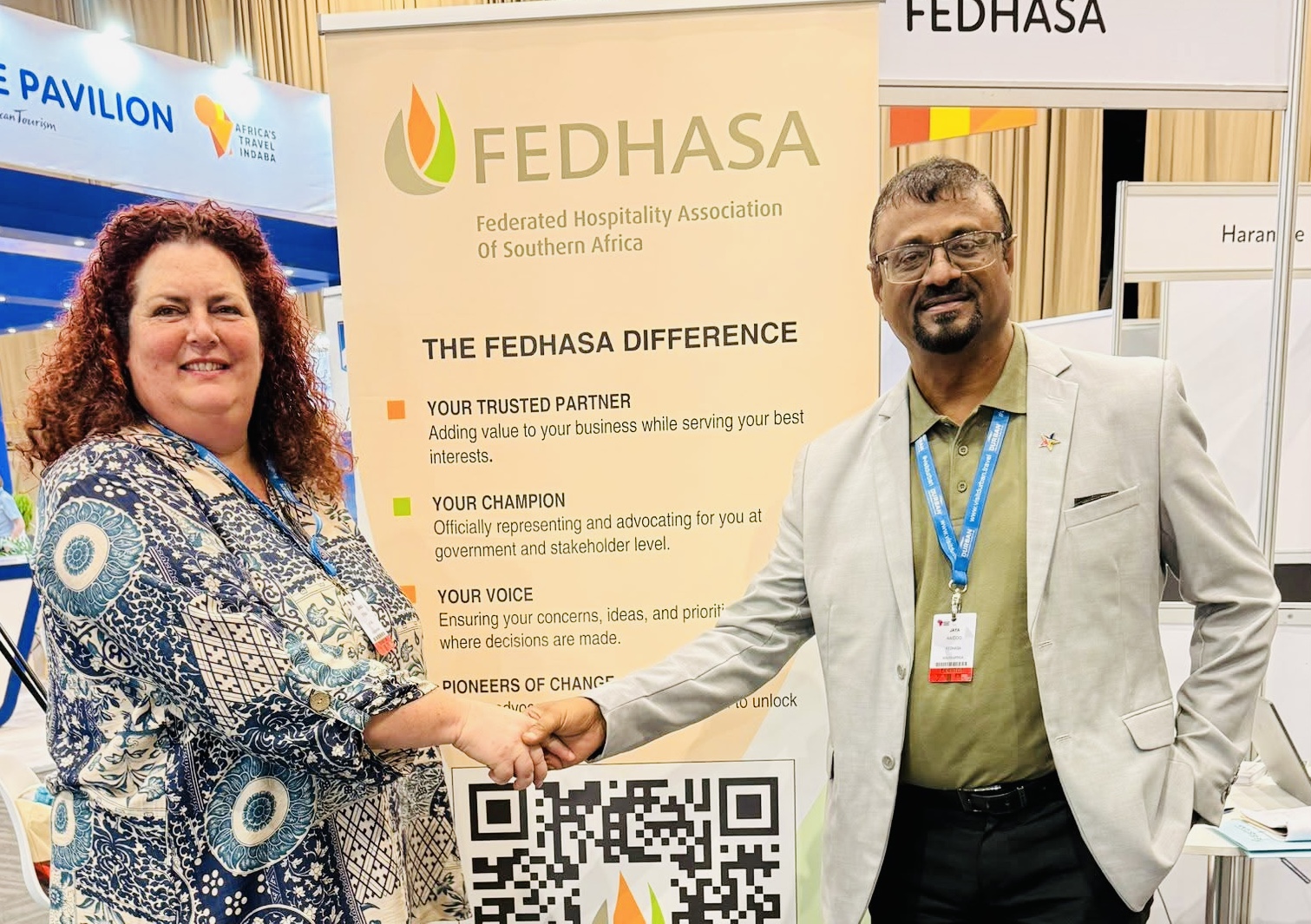
The Federated Hospitality Association of South Africa (FEDHASA) and Fair Trade Tourism (FTT) are formally working together to advance responsible tourism, across Southern Africa’s hospitality sector.
The two formalised this arrangement at Africa’s Travel Indaba, back in April, by signing a Memorandum of Understanding (MOU).
The area of work includes educational opportunities (such as webinars, workshops, and digital learning hubs), networking, capacity-building, and market access, as well as collaborating on policy, research, projects, and events that encourage ethical tourism.
FTT leads on responsible tourism in Africa, as a certification body, operating across South Africa, Mozambique, Zambia, Tanzania and Uganda.
This encompasses fair wages and working conditions, equitable distribution of benefits, ethical business practices, and environmental stewardship.
Grace Stead, FTT General Manager, said according to a Sustainable Travel Report, released by Booking.com’s in 2024, nearly half of international travellers turn to accommodation with certified sustainable credentials.
She also said a Directive by the European Union (EU) on Empowering Consumers for the Green Transition (Directive 2024/825), which becomes binding from 27 September 2026, is reshaping the terms on which international markets engage with tourism products.
“It is evident that, for South African hospitality businesses competing for international visitors, verified sustainability credentials are fast becoming a prerequisite for market access.”
Jaya Naidoo, General Manager of FEDHASA in the KZN and Eastern Cape, said responsible tourism, is the direction the global market is moving, and South African hospitality needs to move with it.
“Our partnership with FTT gives our members a direct connection to one of Africa’s most credible and established responsible tourism certification frameworks. This is FEDHASA in action: removing barriers, opening doors, and ensuring our members have what they need to compete and lead.”
Partners are expected to meet every quarter to share relevant information and updates, review progress, and identify new opportunities.
Picture: Supplied