

This story was written and published by the Johannesburg Wildlife Veterinary Hospital.
This Heritage Day, 20 leopard tortoises woke up in the Eastern Cape to the sounds, tastes and smells of home.
For some, the journey back took months. For others, years.
Each arrived at Johannesburg Wildlife Veterinary Hospital with a different story. Some came to us because people recognised that a wild animal does not belong in a back garden. Others were confiscated by law enforcement after being found in cruel or illegal possession, or caught up in the illicit wildlife trade.
Whatever brought them through our doors, each deserved the same thing: the chance to be a wild tortoise again.
Our team cared for them until they were healthy, strong and ready for release. But rehabilitation isn’t simply about getting an animal well enough to go back into the wild. Where they return matters too.
Genetic testing through SANBI showed that all 20 belonged to the southern genetic clade of leopard tortoises, tracing their natural origin to a specific area of the Eastern Cape.
And suddenly, after everything they had been through, we knew where home was.
Getting 20 rather large leopard tortoises from Johannesburg back where they belong, however, takes a village.
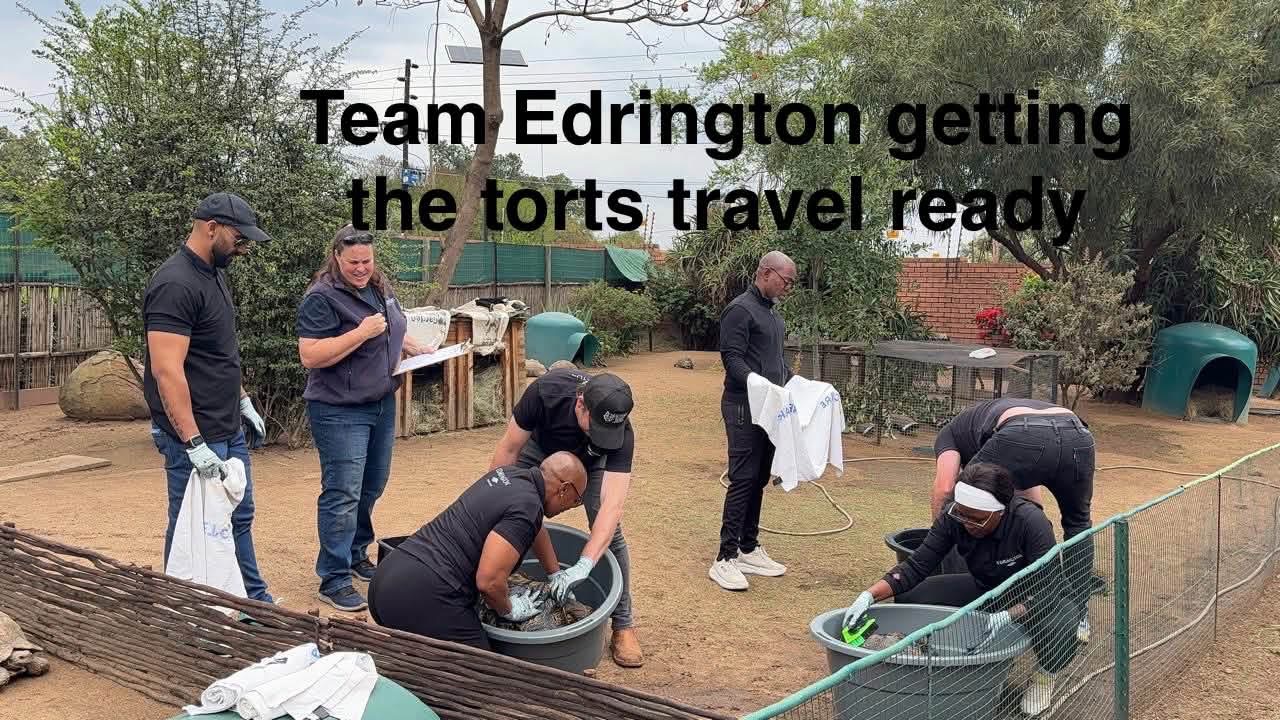
It takes our monthly supporters. People who collect wild melons. People who donate kennels. Aunty Cheryl arriving with bags and bags of fresh grass and succulents for our fussier patients. Corporate supporters who don’t only arrive with funding, but with scrubbing brushes, willing hands and plenty of enthusiasm when 20 tortoises need final health checks and preparing for an early-morning departure.
A very special thank you to Virbac for sponsoring the microchips that allow each of these tortoises to remain permanently identifiable after release.
And then there are the people who quite literally helped us get them home.
A huge thank you to Airlink and Airlink Cargo for once again helping our wildlife get where they belong, and for flying these 20 very precious – and rather heavy! – passengers safely from Johannesburg to the Eastern Cape.
At the other end, the Conservation Landscapes Institute was waiting to help complete the final part of a journey that, for some of these tortoises, had begun years before.
From veterinarians, geneticists and conservation ecologists to law-enforcement officers, donors, drivers, pilots, cargo teams, corporate supporters and the people protecting the land to which these animals returned – every person played a part.
And perhaps that is what Heritage Day means to us.
Our natural heritage isn’t only something we inherit.
It is something entrusted to us.
The wild places, animals and ecosystems that make South Africa extraordinary are ours to protect – so that one day, they can be inherited by our children and theirs.
Today, 20 leopard tortoises are back where they belong because a remarkable number of people chose to care, to help and to work together.
Twenty little pieces of South Africa’s natural heritage are home.
Picture: Supplied