

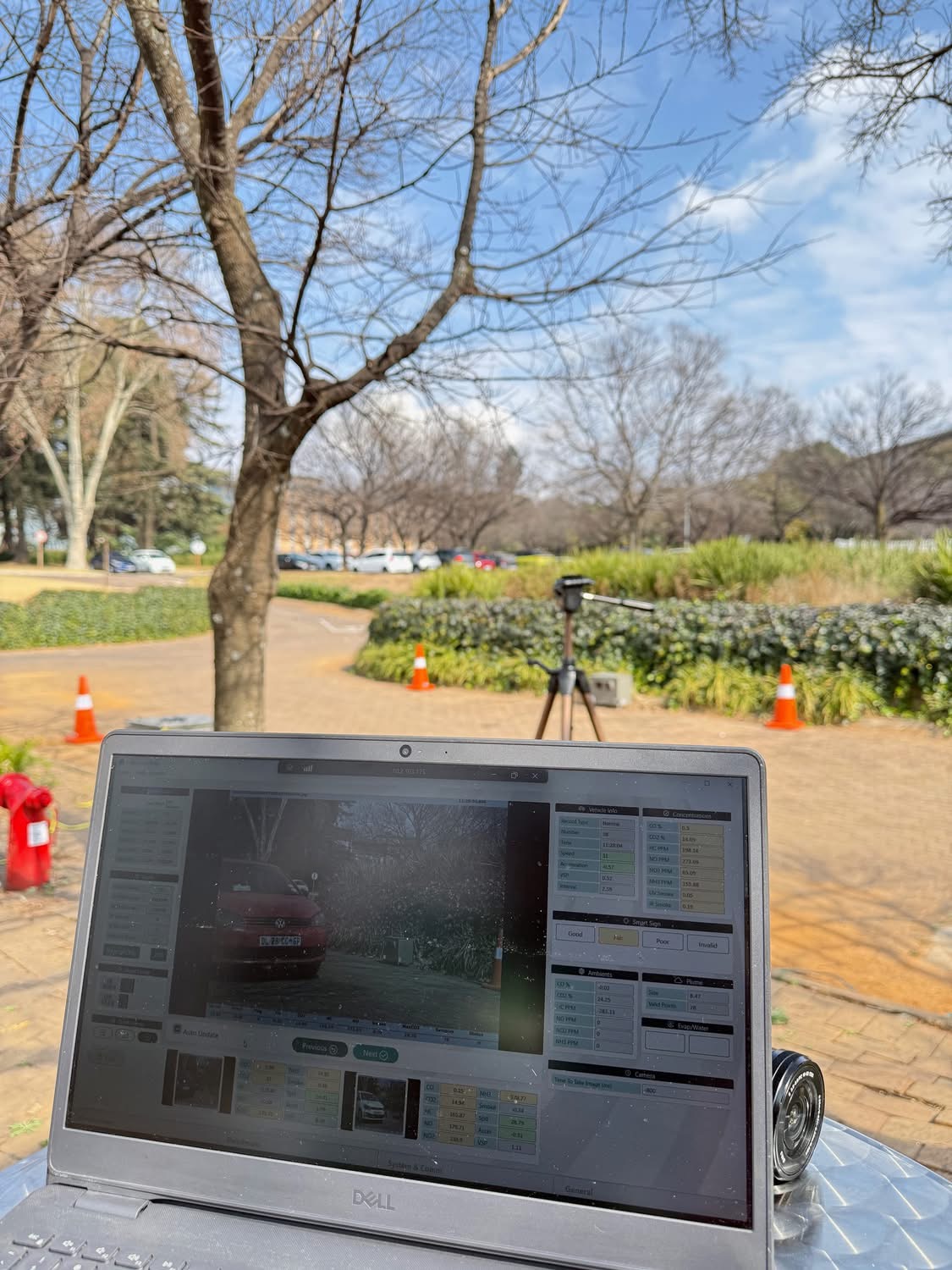
South Africa’s first roadside remote sensing emissions study was announced on Thursday.
Researchers are hoping to measure emissions of over 100,000 vehicles, across Johannesburg and Gauteng using a stationary roadside sensors.
The data collected, will be fed back to the City, to design more effective policies to reduce pollution and improve air quality.
Vehicle emissions are responsible for more than 75% of nitrogen dioxide pollution in Joburg. Until now, there has been a lack of accurate, real-world data to guide solutions.
The project is part of the global TRUE (The Real Urban Emissions) Initiative and aims to create cleaner, healthier streets for everyone.
As part of the launch, UJ-PEETS hosted a workshop with OPUS Remote Sensing to train City officials and local partners in emissions monitoring.
Testing will run until September 2025, with a final report expected in mid-2026 to inform future air quality strategies across Africa.
Partners in the project are the City of Joburg, through its Environment & Infrastructure Services Department (EISD), the University of Johannesburg’s Process, Energy & Environment Technology Station (UJ-PEETS), the International Council on Clean Transportation (ICCT), and Breathe Cities.
Picture: UJ-PEETS