

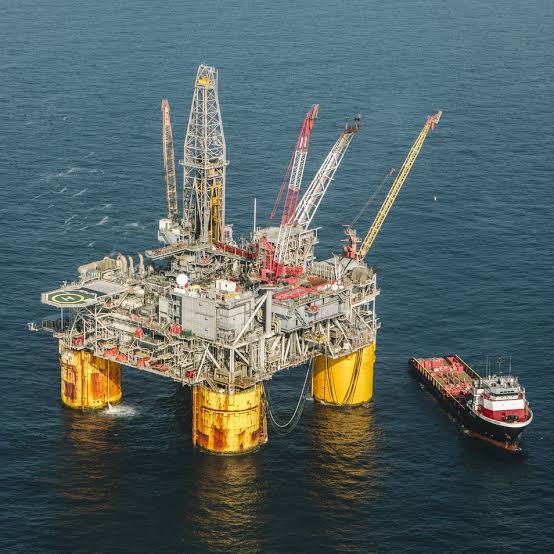
Civil society groups, including The Green Connection and Natural Justice, and some West Coast communities, argue Shell’s Environmental and Social Impact Assessment Report (ESIAR), is both flawed and potentially unlawful.
This follows Government’s thumbs up for Shell’s oil and gas projects in the Northern Cape Ultra Deep (NCUD).
Neville van Rooy, Community Outreach Coordinator at The Green Connection, said “if allowed to proceed, the proposed project will be the deepest offshore well in South Africa and the third deepest in the world. Yet unbelievably, the emergency plans for this highly risky venture remain undisclosed, even to the State.”
van Rooy also said “Shell wants to drill 3,200 metres below sea level – nearly as deep as where the Titanic wreckage lies. This ultra-deep environment is extremely harsh due to the crushing pressure that results at this depth, which is also always in darkness and consistently near-freezing (below 5°C). With all the challenges that could come with such a project, how can South Africans accept that the company has secured environmental authorisation without providing a detailed strategy showing how it would handle a blowout at such unprecedented depths?”
The organisations argue that the final ESIAR unlawfully underestimates the risk and scale of a blowout by relying on an unsupported 20-day oil spill scenario.
“This estimate assumes that a capping stack located at Saldanha Bay could be installed within that period. However, since the drilling is planned at depths exceeding the stack’s capabilities, Shell should have identified suitable alternative capping solutions. There are only three capping stacks globally that are equipped for such depths. These are located in the United Kingdom (UK), Singapore, and the United States (US), but it is not clear whether Shell can access or rapidly deploy them to South Africa.”
Shahil Singh, Legal Advisor at The Green Connection agrees.
“This lack of transparency violates several legal protections, including Section 33 of the Constitution, which guarantees the right to fair, reasonable, and lawful administrative action. It also violates Section 3 of the Promotion of Administrative Justice Act (PAJA), which requires that people must be properly informed and given a fair chance to respond when decisions significantly affect their rights or expectations.”
The appeals also highlight that the EIA failed to consider the combined impact of Shell’s drilling with up to 20 other wells already authorised along the West Coast.