

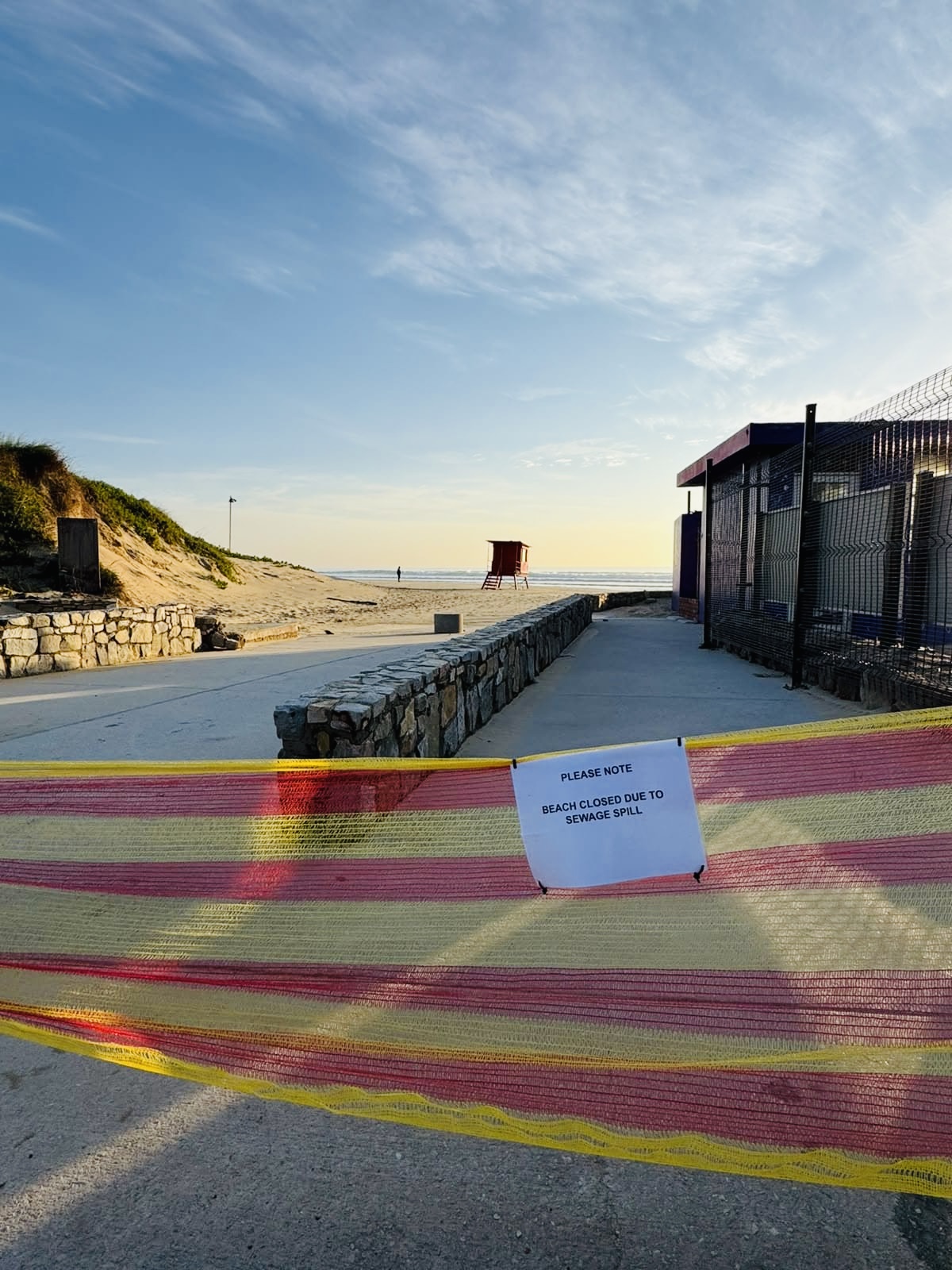
Civil society is tackling sewage issues in the Nelson Mandela Bay’s wastewater system.
The Nelson Mandela Bay Civil Society Coalition (CSC), reminded citizens on Tuesday, that the metro’s Green Drop score is around 36.3%.
This is less than half the 80% minimum acceptable standard for metropolitan municipalities.
Moreover, a recently published report studied the metro’s wastewater treatment works, pump stations, sewer network and associated infrastructure.
The study uncovered that the metro’s Green Drop score went from 81% in 2011 to 65% in 2013, down to a current 36.3%.
Zukile Madikane, Spokesperson of the Coalition, warns that this is no longer a collection of isolated sewage spills or failing facilities, but a system-wide crisis threatening public health, the environment, livelihoods and the Bay’s economy.
“The numbers tell a story that can no longer be ignored. We are no longer dealing with a few broken pumps, a blocked sewer or an unfortunate sewage spill. We are looking at a wastewater system that is progressively losing its ability to perform its most basic function – safely moving, treating and disposing of human waste.”
Madikane also added that “a Green Drop score of 36.3% should be treated as a municipal emergency. The fact that the score has almost halved since 2021 should alarm every resident, business, councillor and government authority responsible for this city.”
Similarly, Leanne De Jager, a Member of Parliament, warned visitors and residents of Tshwane against using the Marais Dam picnic site in the Rietvlei Nature Reserve, due to worsening pollution.
New research by water expert Dr Michael van der Laan found phosphorus levels at Marais Dam are at an astronomical 5.1mg/L.
This is five times the legal discharge limit and twenty times the threshold associated with severe algae blooms.
Picture of a Manhole at west end of Kings Beach parking lot overflows onto parking lot and then via stormwater drainage onto Kings Beach itself, by Zukile Madikane.