

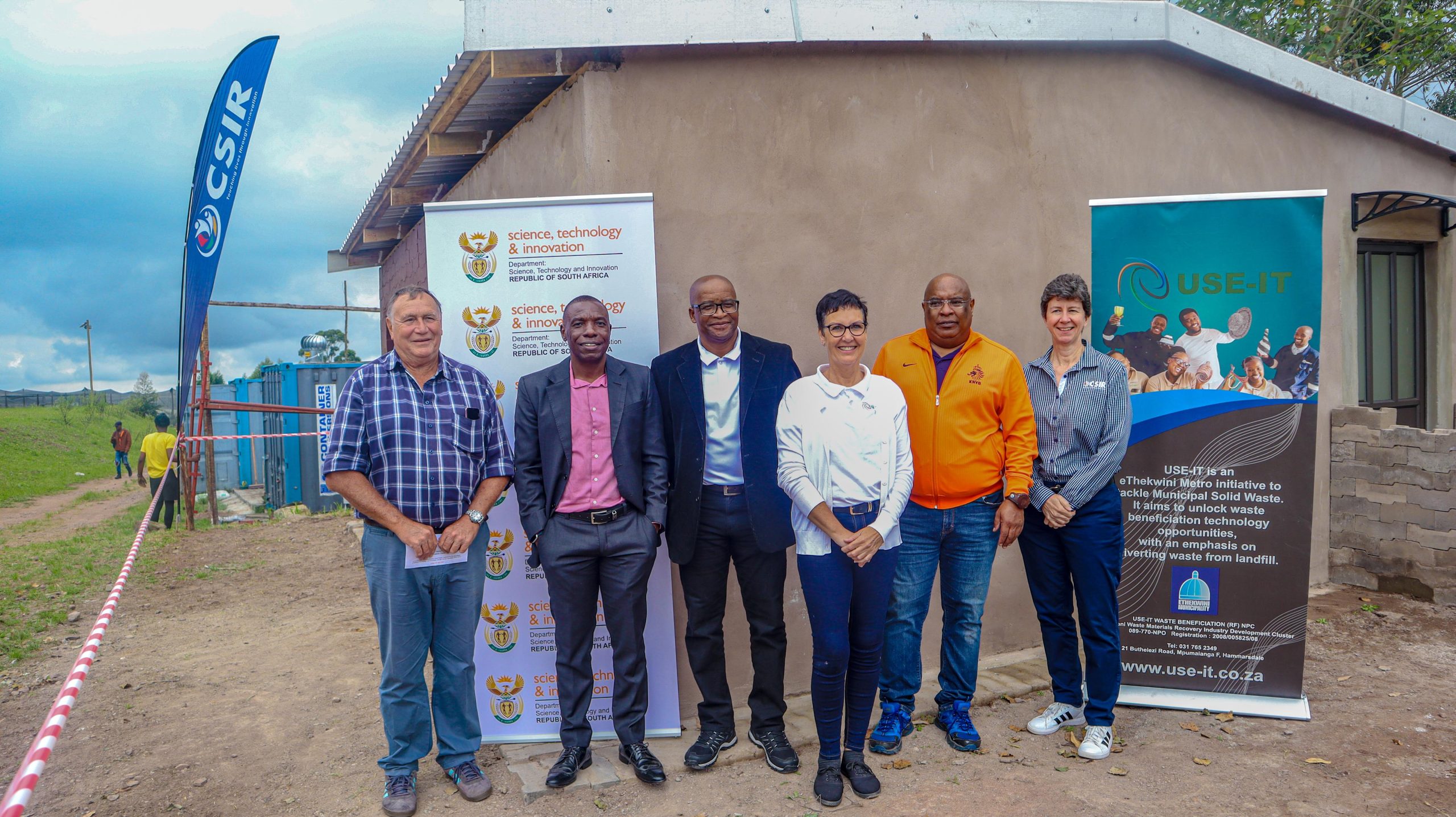
This article was written by Phetolo Phatsibi, Zama Mthethwa, of the Council for Scientific Research (CSIR) and the Department of Science, Technology and Innovation.
Waste material from the construction sector can now be used in an innovative green building block used to build low-cost RDP houses through a Department of Science, Technology and Innovation (DSTI)’ Circular Economy Demonstration Fund aimed at demonstrating proven circular economy interventions, such as, technologies, innovative process improvements, social innovations that have not yet achieved scale or impact in South Africa.
This milestone was marked on 11 April 2025 by the Council for Scientific and Industrial Research (CSIR), who partnered with Use-It Waste Beneficiation NPC and Key Bricks (Pty) Ltd, to demonstrate the prototype.
The DSTI Deputy Director-General for Socio-Economic Innovation Partnerships, Dr Mmboneni Muofhe and CSIR Executive Manager: Hosted Programmes, Bongani Memela presided over the ribbon-cutting ceremony for the newly built demonstration house.
Guests were hosted on site by the CSIR project manager, Aubrey Muswema; CSIR senior researcher in sustainability economics and waste; Belinda Putterill, Managing Director of Use-it and Matt Olivier, Chief Executive Officer for Key Bricks.
Those attending the site visit were guided through the process of manufacturing the innovative building blocks, starting from the crushing of waste glass, and building rubble, to the finished block, and finally the low-cost housing structure.
The site visit provided attendees with behind-the-scenes insights to Key Bricks’s operations, material mix ratios, design of structures and equipment used to produce the interlocking block. Use-It and Key Bricks both shared their journey on taking steps to become green in their operations and working closely with the CSIR to test and refine the product ideas, by adopting circular economy principles.
The green block contains 70% recycled waste content, including crushed waste glass, and construction and demolition waste. The block itself is 100% recyclable.
The design of the interlocking block, allows for the building to be easily constructed with limited building experience, and if needed, the structure can be later deconstructed and the blocks reused at another location. The block is designed to interlock like LEGO® blocks, requiring no cement between layers. Each block features internal hollows, which when stacked, create channels for installation of electrical and water pipes, reducing the need to cut grooves (also known as ‘chasing’), ensuring that the blocks remain intact. The blocks came from the need to find local markets for waste glass and building rubble in KZN.
“It’s not viable to transport waste glass from KZN to Gauteng for recycling, the margins on this are just too slim, resulting in a lot of this waste remaining uncollected and impacting the environment,” said Putterill. “We needed to find ways to use glass locally in KZN.” Cities, towns and villages across the country are also plagued with the illegal dumping of building rubble in open spaces. These blocks use crushed waste glass, and construction and demolition waste, thereby reducing the need for conventional virgin materials.
“Not only is building with this innovative block cost-effective, but it also saves construction time and requires minimal labour and building experience. The top structure was put up by relatively unskilled labour from foundation stage to the roof within seven days – this is only possible because of the interlocking nature of the faceted blocks. By using waste as a resource, this interlocking block can unlock new business opportunities in the construction industry. Local businesses and value chains can benefit from the potential to generate additional revenue streams. It also has the potential to accelerate social relief efforts by addressing the country’s housing backlog, while helping to keep our cities, towns and villages clean,” says Muswema.
Picture: Supplied