

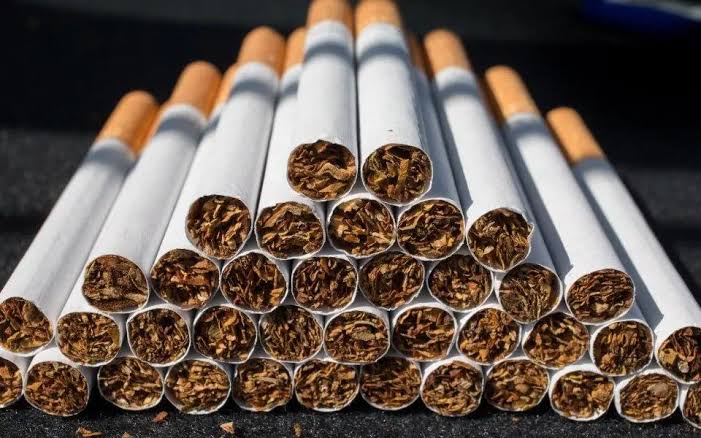
Tobacco use in Southern Africa is on the rise, despite being responsible for 8 million deaths globally every year and more than 30, 000 in South Africa annually.
In addition, a survey collected by ATIM over a 15-year period, showed that the number of 16- to 34-year-olds smoking cigarettes and vaping, is on an upward trajectory.
Smoking in that age group, went from 15,3% back in 2010, to an astonishing 20,3% in 2024.
This year’s campaign, joined by researchers from the University of Pretoria, planned to reveal the tactics of the tobacco industry targeting young people.
Professor Lekan Ayo-Yusuf, Head of the School of Health Systems and Public Health at the University of Pretoria (UP), also a member of the World Health Organisation (WHO) Tobacco Products Regulations Scientific Group; Director of the National Council Against Smoking; and founder of the African Centre for Tobacco Industry Monitoring and Policy research (ATIM) at UP, said tobacco causes various life-threatening conditions, including different forms of cancer, such as oral and lung cancer, and heart diseases.
“Nicotine also reduces the ability of immune cells in the lungs to fight infections like tuberculosis (TB), which is why one out of 10 deaths from TB is related to smoking. We have to regulate the use of all tobacco and nicotine products in the interests of public health.”
Ayo-Yusuf also said of concern is the industry’s ability to find ways to circumvent regulations, and lobbies against public health measures aimed at reducing tobacco use. He also said young people are particularly susceptible to marketing, especially to vaping and heated tobacco products, and hookah use, with attractive packaging and retail outlets luring them in.
Kenya’s Government published legislation in March 2025, stating that some of the graphic warnings on cigarette packs must be included on e-cigarette or e-liquid packaging.
“We need to do the same in South Africa; e-cigarettes need to be regulated similarly to cigarettes,” said Prof Ayo-Yusuf.
Simply put, more oversight of the massive illicit (tax-not-paid) cigarette market is required in South Africa.
“A study we conducted among South Africans showed that when selecting cigarette brands, their response is strongly based on what the pack looks like. This corroborates with the results of experiments conducted elsewhere by the tobacco industry, where it found that cigarettes in a white pack were seen as ‘light’, whereas the very same cigarettes in a red pack were perceived as being ‘strong’. Similarly, recent e-cigarette research in the UK showed that if the product came in a bland, standardised pack, young people would be less interested.”
Researchers are now hoping for Parliament’s Committee of Health, to ramp up action, in line with WHO’s MPOWER approach, requiring the monitoring of: (M) the use of tobacco with proper polices in place to regulate the industry; protect (P) the public from second-hand smoke; offer (O) structured, free programmes to help people quit; warn (W) about the dangers of tobacco use; enforce (E) bans on any form of tobacco advertising; and raise (R) taxes on tobacco.