

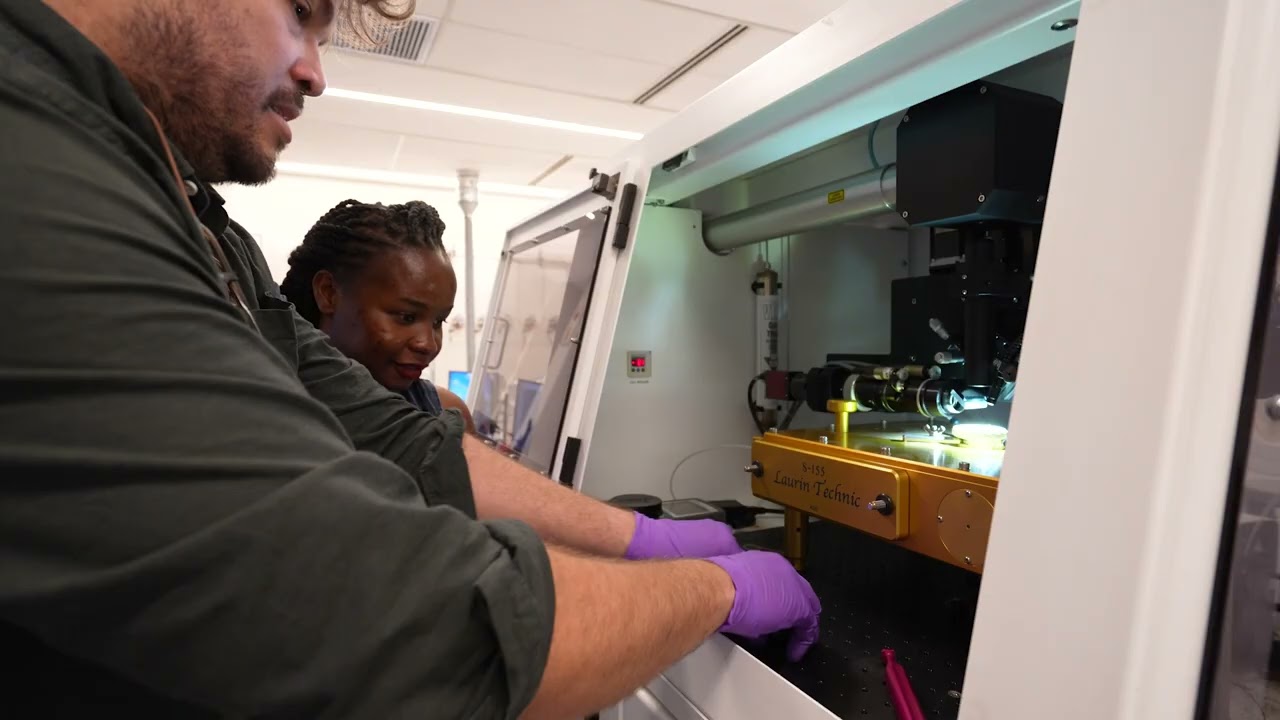
Researchers now have automated mineralogy and U-Pb age-determination systems, to allow them to explore deep history and identify resources vital to the clean-energy transition.
This is thanks to the recently launched Earth Observatory and the African Research Centre for Ore Systems Science (CORES) by the Witwatersrand (Wits) on Tuesday.
This move is seen as a significant step towards a more responsible, inclusive, sustainable and technologically advanced minerals sector.
Professor Lynn Morris, Deputy Vice-Chancellor for Research and Innovation, said “the launches symbolised how Wits research connects the past, present, and future through science that directly serves society.”
She said Africa’s resource landscape, can drive innovation, sustainability, and opportunity for generations to come.
South Africa’s mineral wealth is written in some of the oldest rocks on earth, this includes the Kaapvaal Craton, Barberton Greenstone Belt and Vredefort Dome, which tell a 3.5-billion-year story of planetary evolution, meteorite impacts and mineral formation.
For more than a century, Wits scientists have been instrumental in decoding that record.
A complementary initiative, the African Research Centre for Ore Systems Science (CORES), is expected to lead the integration of economic geology, extractive processes, and data-driven innovation.
Professor Glen Nwaila, Director of CORES, said “we meet in the second quarter of the 21st century with fresh challenges and opportunities. Decarbonisation, energy security, and resilient supply chains hinge on critical minerals. Communities rightly demand that mining be safer, cleaner, and more transparent. CORES is our instrument for that work. We aim to bridge the gap between ore, process, product, and waste through geoscience, engineering, and data science.”
Nwaila also said while CORES’ predecessor- the Economic Geology Research Institute (EGRI), taught the world how to read ancient rocks, CORES will help the world make better decisions under uncertainty.
Picture: Supplied