

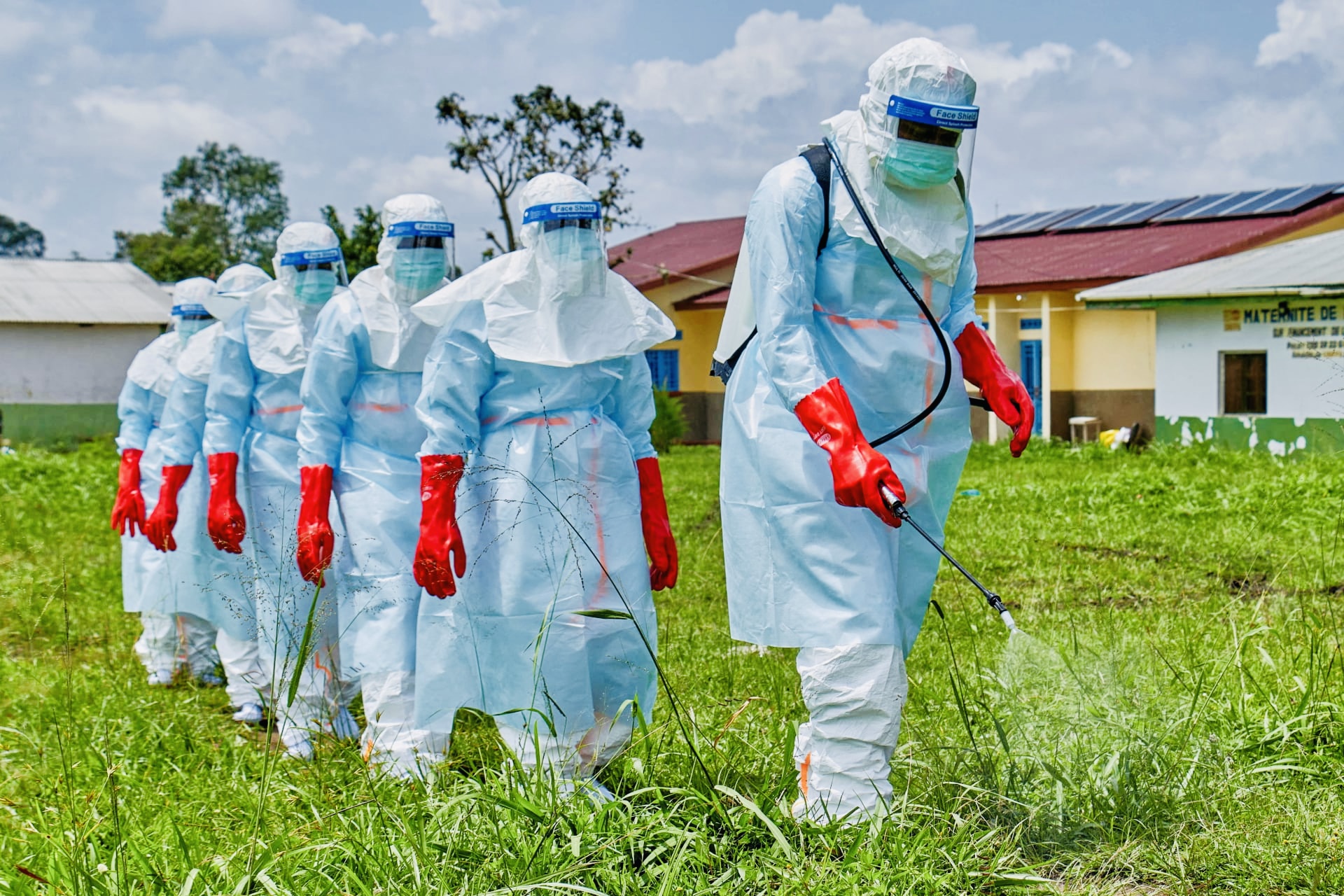
The Centers for Disease Control and Prevention (CDC) said there are now more than 28,600 cases of Ebola reported.
This makes it the largest Ebola disease outbreak to date.
Over 1,000 suspected and confirmed cases across the Democratic Republic of the Congo (DRC) and Uganda, were recorded in May.
Of the current cases, 134 were confirmed, including nine in neighboring Uganda.
About 240 deaths were recorded.
The World Health Organization (WHO) classified the regional spread as a Public Health Emergency of International Concern (PHEIC).
Bundibugyo virus disease (BVD) is a severe, often fatal illness caused by Bundibugyo ebolavirus (BVDV).
It is but one of the species within the Ebolavirus genus known to cause disease in humans.
The virus spreads through direct contact with the blood or body fluids of an infected person.
Infectious body fluids may include vomit, diarrhoea, urine, saliva, sweat, breast milk, and semen.
The WHO said healthcare-associated transmission and unsafe burial practices are recognised as important amplification factors.
Infection can occur when these fluids come into contact with broken skin or the eyes, nose, or mouth.
Transmission may also occur through contact with contaminated items such as clothing, bedding, medical equipment, or needles.
The World Health Organization warned Kenya this week, against hosting a patient infected by Ebola.
But the East African country, said it has strengthened preparedness against Ebola at Jomo Kenyatta International Airport (JKIA), Kenya’s busiest port of entry.
An assessment of Port Health Services reviewed passenger screening systems, thermal scanners, isolation facilities, laboratory readiness, aircraft and wastewater surveillance, and overall emergency response coordination.
Although Kenya has no confirmed Ebola case so far, the country said it continues to strengthen preparedness by enhancing screening at points of entry, deploying additional officers, improving laboratory diagnostic capacity, fast-tracking specimen processing, reinforcing surveillance systems across air, sea, and land borders, and ensuring rapid response mechanisms remain operational.
Picture: Supplied/ Council on Foreign Relations.