

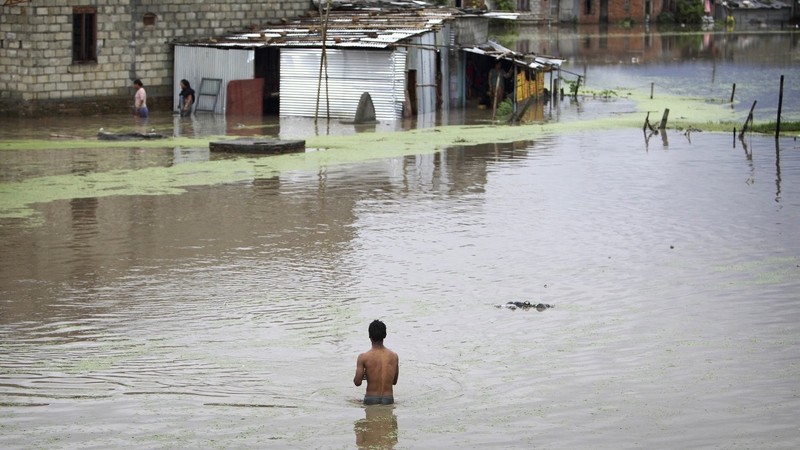
A new study from researchers at Peking University reviewed nearly 1,000 studies on the movement of populations under disasters.
These include climate change events, forced displacements and conflict challenges.
Key findings are that mobility during crises works in two ways- a response to external shocks and a further transmitter of systemic, cascading impacts.
These findings also emphasize the need for human mobility and its far reaching impacts – to be integrated into disaster management frameworks by governments.
To address this, the researchers propose the FAIR-HEART framework to guide equitable and resilient mobility governance.
Authors Fengjue HuangJunqing TangPengjun Zhaoet al, framework, includes optimising evacuation strategies in mountain communities to mitigate geohazards.
Furthermore, it integrates nine principles- into disaster management to include flexibility, accessibility, inclusivity, resources, harmonization, education, anticipation, reversal, and technology.
This framework is in favour of a one-size fits all solutions.
Picture: The World Economic Forum