

This article was written by Afia Agyapomaa Ofosu, a Science Storyteller, Gender & Climate Action Activist.
Ghana’s forests were once places of rest, from the northern savannahs to the southern rainforests, the land offered both beauty and tranquility. The scent of fresh soil after the rain, the shade of Wawa trees, and the harmony of birdsong under Odum and Mahogany trees, shaped everyday life for nearby communities.
These forests were more than just beautiful views. They were important places for plants, animals, and farming, providing food, homes, and safety.
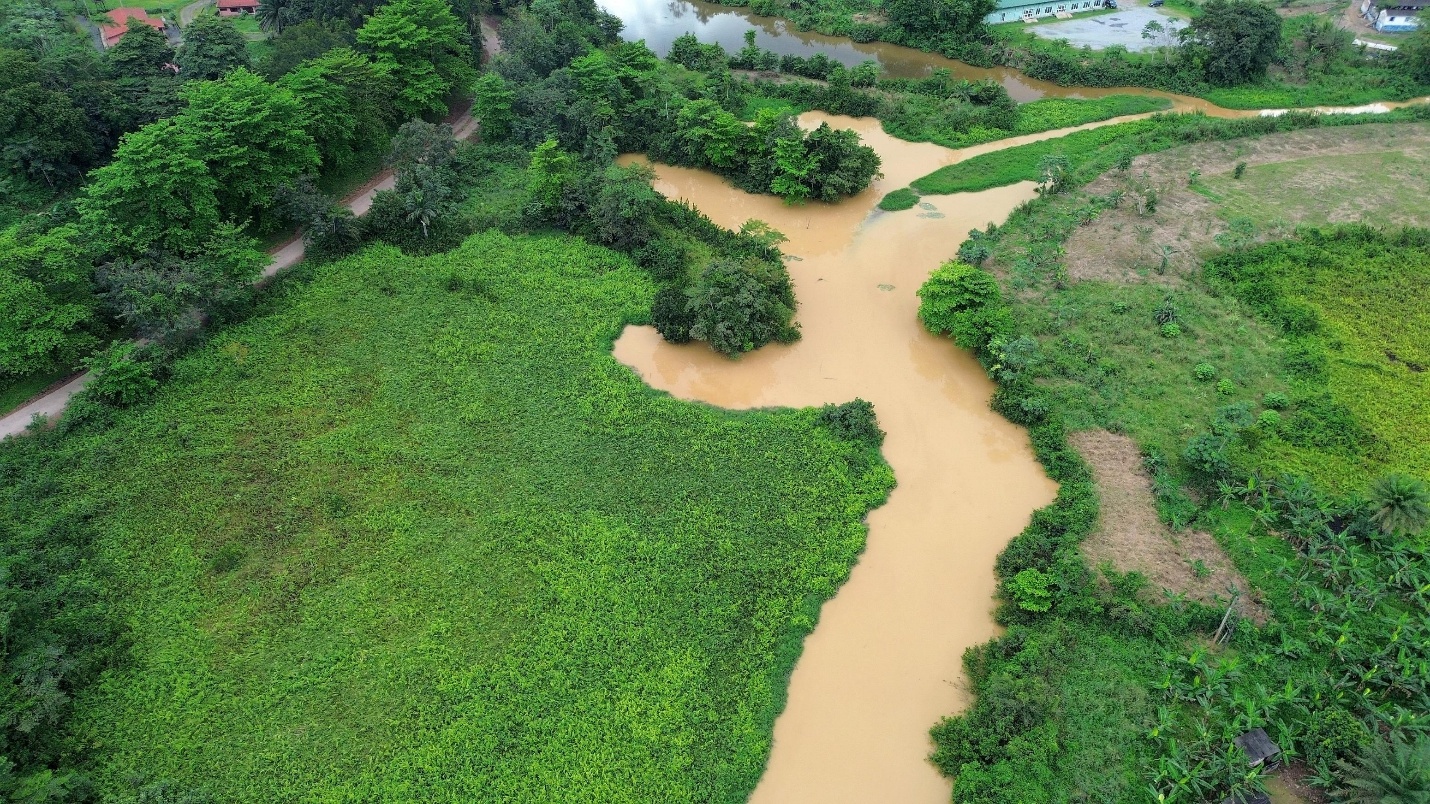
Today, in many of these forests, the soundscape has changed, the canopy no longer holding birdsong. Instead, the hum of machinery, smoke from burning roots, and pools of tainted water mark their transformation.
While illegal logging has historically drained Ghana’s forests—costing the country over $100 million annually in uncollected timber revenue, according to research by Prof. Joseph Kofi Teye, illegal gold mining is altering the land more visibly and quickly.
Across six of Ghana’s sixteen regions, a staggering 45 out of 288 forest reserves have been ravaged by illegal mining activities. In nine of these, the damage is absolute—ecosystems dismantled, biodiversity lost. The trees that once absorbed carbon and sheltered wildlife are gone, leaving open wounds in the land.
When these trees fall, the systems they sustained also collapse. Rivers shrink, crops wilt, and formerly temperate climates become harsh. According to the Lands and Natural Resources Ministry, 5,252 hectares of forest reserves have been lost to illegal gold mining—known locally as “galamsey.”
Illegal miners, armed with tools such as pickaxes, shovels, changfang machines, excavators, and pump machines, frequently operate in environmentally sensitive areas, including rivers and protected forests.
The process typically begins by clearing vegetation with chainsaws. Excavators then remove soil in search of gold veins. This soil is processed with mercury or cyanide—both hazardous to human and environmental health.
Galamsey is especially rampant in the Western and Middle Belt regions of Ghana. David Nana Kudiewu-Miod, a geological mining expert with licensed firm Mohammed Brothers in Tarkwa, has witnessed this devastation firsthand. Born in Obuasiand working in Tarkwa—both gold towns—he observes that while illegal mining has long existed, it has worsened drastically in the past two decades.
Touching on the health implications of illegal mining, Kudiewu-Miod revealed a fact: “In 2024, the Environmental Protection Agency (EPA) disclosed findings from a research study conducted with Newmont Mining Corporation in Tarkwa. The study sampled the blood of individuals not directly involved in mining activities, such as food sellers, hawkers, and street traders in Tarkwa. Alarmingly, the results showed higher concentrations of heavy metals, particularly mercury, in their blood.
A flicker of hope emerged on April 3, 2025, when the Lands and Natural Resources Minister Emmanuel Armah-Kofi Buah announced at a press conference, “through sustained joint operations, seven of these reserves have now been reclaimed from armed artisanal miners.”
“However, these gangs have attempted to re-enter the forests, leading to violent confrontations with the Forestry Commission, including a near-fatal assault on one of our personnel,” he said.
As the minister’s words echoed across the nation, they sparked a sense of cautious optimism.
Daryl Bosu, Deputy Director of A Rocha Ghana, an NGO working to protect the environment and communities to adapt to climate change, posed a critical question: “How will reclaimed forests be secured?”
“The reclamation of the seven forest reserves seems to be a charade. As soon as the dedicated task force departs, illegal miners sneak back in, rendering it a futile game of ‘cat and mouse,’” he said.
Moreover, recovering these forests will take time. Restoration can take anywhere from 5 to 15 years, considering the scale of destruction caused by mining.
“Several factors determine how long it takes, and the timeline can vary significantly,” says Bosu.
The presence of residual dormant seeds can aid regrowth, but this process is time-consuming. Initially, the landscape may look barren, but nature slowly starts to reclaim it. “In the first 1-5 years, you’ll mainly see colonizer species like grasses and cover crops.”
Whereas these plants grow, they attract birds and rodents that bring in new seeds, gradually increasing biodiversity.
Meanwhile, if left alone, progress may be slow. “If the government intervenes with targeted efforts like soil improvement, leveling, and planting specific tree species, significant vegetation growth can occur within 5 years.”
While restoration efforts can yield promising results, it’s essential to understand their limitations. “Restored forests can never replicate the ecological functions and characteristics of primary forests,” he notes.
Picture: Murky waters: The aftermath of illegal mining in Ghana’s forest reserves (Photo Credit: Festus Randy Jackson-Davis)