

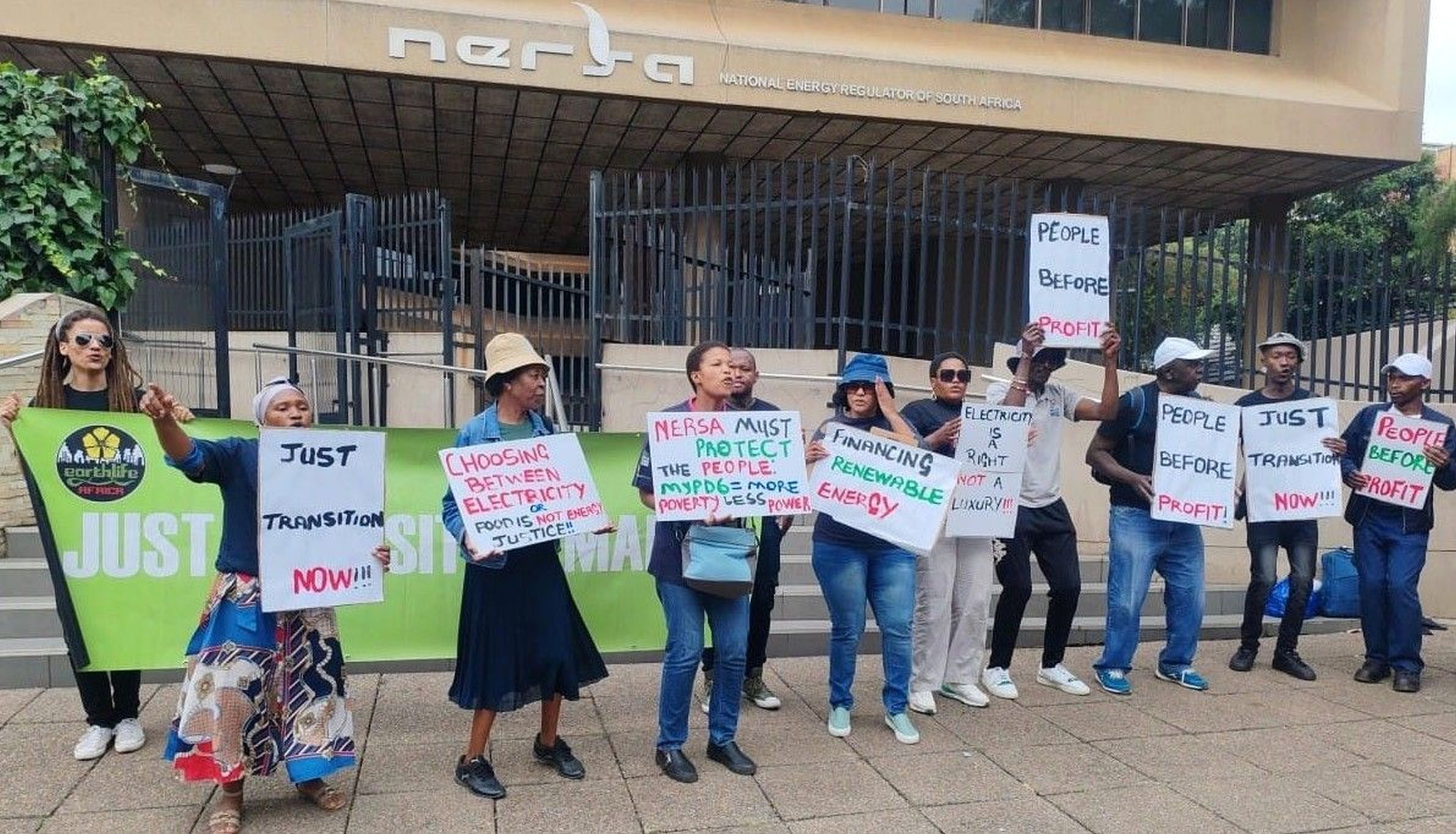
Earthlife Africa Johannesburg joined the Women in Energy and Climate Change Forum (WECCF), to protest against Eskom’s electricity tariff increases under the Sixth Multi-Year Price Determination (MYPD6).
The protest was held outside the National Energy Regulator of South Africa (NERSA) headquarters in Pretoria, on Thursday.
The civil society organisations are concerned another hike may deepen energy poverty and entrench inequality.
“Majority of South Africans are already buckling under the pressures of the high cost of living. Another electricity price increase – which is a consequence of Eskom’s failures – will worsen inequality and energy poverty,” said Thabo Sibeko, Senior Program Officer at Earthlife Africa.
“It is high time that Eskom and NERSA act in the public interest by prioritising affordable, socially just energy solutions” he added.
While NERSA claims it reduced Eskom’s requested increases and followed a public process, Earthlife Africa says the decision still puts Eskom’s finances ahead of people’s needs, forcing struggling households to pay more.
“Energy poverty remains widespread, with around 43 percent of households unable to meet basic electricity needs, forcing many to rely on unsafe fuels such as paraffin, candles, and wood, which harm health, safety, and dignity” said Sibeko.
A platform of women from townships and informal settlements in Gauteng, called the WECCF, says NERSA’s decision fails to reflect the realities of the majority of households, where women often manage scarce resources.
Rising electricity prices are directly linked to hunger, stress, household instability, and economic vulnerability.
Ntombizodwa Rannyadi of the WECCF, said “we are the ones who must choose between buying food and buying electricity. Small businesses run by women collapse because they cannot afford power. Conflicts in households rise, and even lives are at risk when people dependent on oxygen or refrigerated medication cannot keep the power on.”
The WECCF also disputes claims that public participation was meaningful.
Members only learned of the MYPD6 process through the forum, noting little to no outreach via local radio, community platforms, or public education.
Regarding the MYPD6 process, Rannyadi said “you cannot say the public has been heard when the majority of poor communities never even knew this process was happening.”
Questions were sent to NERSA to respond, we will bring you more on this story.
Picture: Supplied