

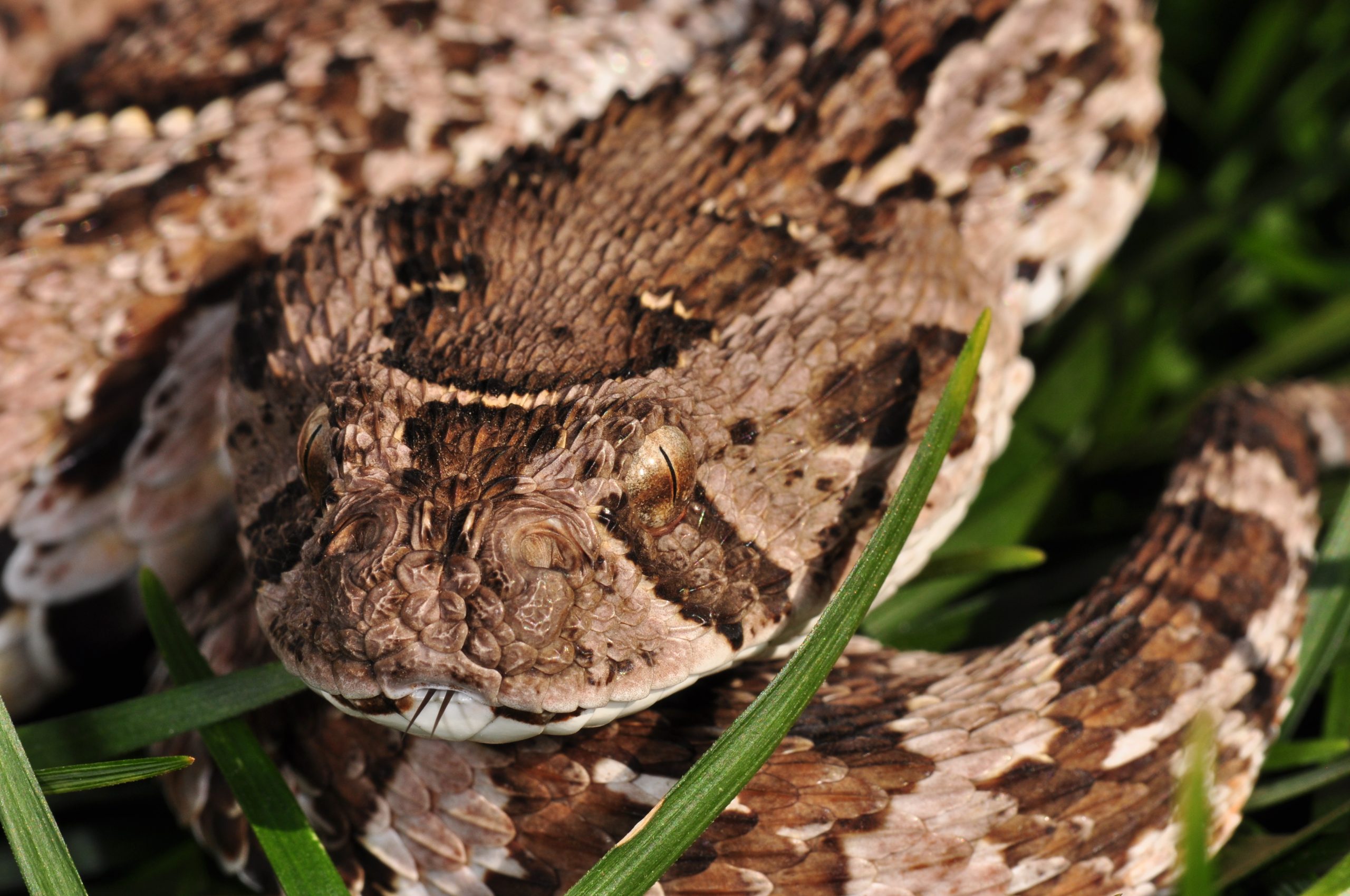
New research from the University of the Witwatersrand (Wits) found that puff adders (Bitis arietans) can be highly efficient at controlling rodent populations that threaten agricultural production on the continent.
This study challenges the traditional view of snakes as agricultural pests and reframes them as beneficial partners for sustainable farming.
Professor Graham Alexander, of Wits said “Puff adders are essentially nature’s perfect rodent control system.Their ability to dramatically increase consumption during rodent outbreaks makes them invaluable allies for farmers facing potential crop devastation.”
They can increase their food consumption by more than 12 times above their maintenance levels when rodent populations surge — far outperforming traditional mammalian predators and offering a natural solution to devastating rodent pest problems.
The study shows that individual adders can consume up to 10 rodents in a single feeding session.
They are ready to feed again just a week later, providing continuous pest management with zero cost to farmers.
Rodent outbreaks during high rainfall years cause millions in crop damage annually, but maintaining healthy puff adder populations could significantly reduce these losses without costly chemical interventions.
The study makes a compelling case for snake conservation, pointing out advantages of puff adders, such as their ability to survive up to two years without food after periods of abundant feeding, remaining in the ecosystem as “on-call” rodent controllers.
They can also adapt their hunting to target rodents specifically when populations begin increasing.
Professor Alexander also said “what’s particularly valuable about puff adders is their natural abundance in many African habitats. While an individual Puff Adder consumes much less than a fox or mongoose, their higher population abundance creates a formidable collective impact on rodent numbers.”
In conducting this research, Alexander used a new measure called “factorial scope of ingestion,” which measures how much a predator can increase its food intake above normal maintenance levels, as well as the impact that a large population of snakes might have on prey animals.
Picture: Wits