

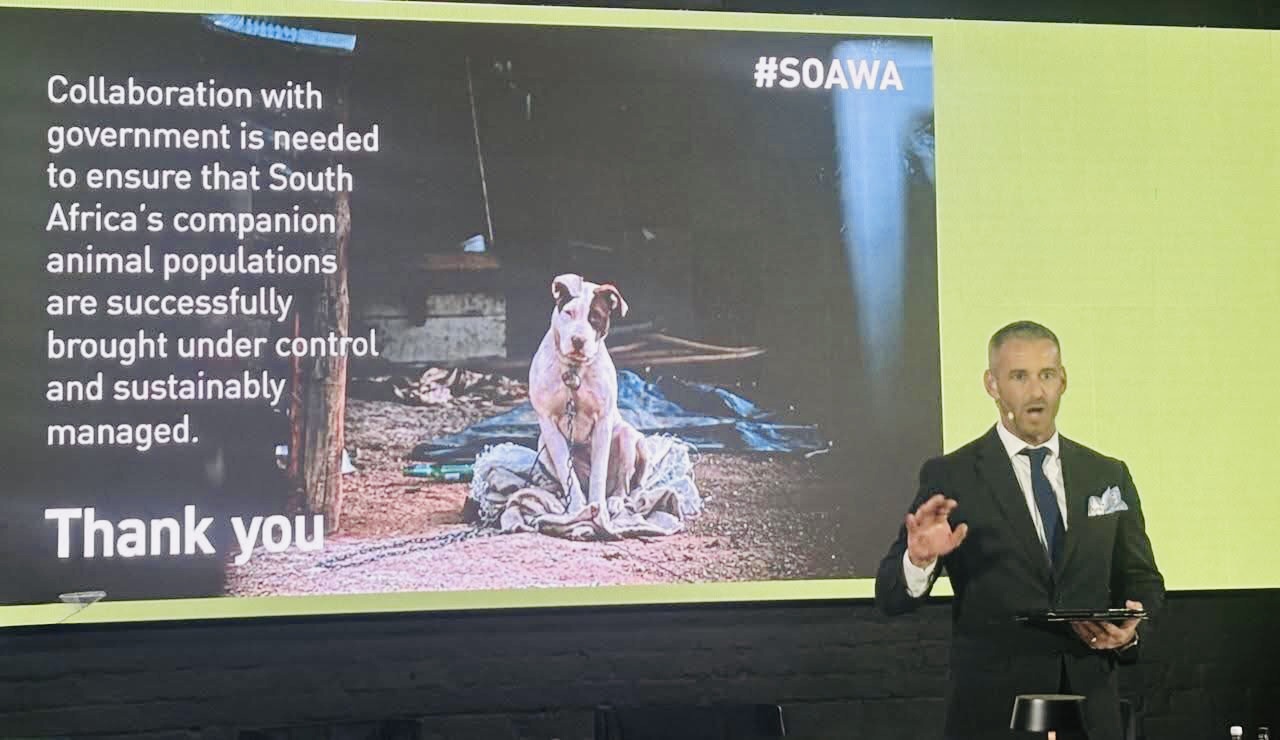
FOUR PAWS organised a session on Wednesday evening, to explore credible data in addressing animal welfare challenges in South Africa.
The annual platform brought together leaders from animal welfare, government, academia and public health, in Cape Town, as well as via livestream internationally.
The event discussed the need to assess the state of animal welfare in South Africa and the urgent need for alignment and reform.
Statistics South Africa was part of the State of Animal Welfare Address.
Fiona Miles, Director of FOUR PAWS South Africa, posed a defining question: “What kind of South Africa do we want to be, one that turns a blind eye to suffering, or one that leads with compassion, justice and dignity for all living beings?”
She said while there is extensive awareness created, laws around animal welfare are still outdated and enforcement is weak and fragmented.
“When animals suffer, we suffer” she said.
There was also a panel discussing the State of Big Cat Welfare, moderated by Tony Gerrans, Executive Director of Humane World for Animals.
This session delved into South Africa’s captive lion industry and the long‑standing policy and governance failures that have allowed it to persist, despite multiple national processes pointing toward its closure.
Dr Audrey Delsink, Director of Humane World for Animals highlighted the inherent welfare harms embedded in the captive lion lifecycle.
“From cub petting to confinement, hunting and the bone trade, captive lions are subjected to a continuous cycle of exploitation. These harms are intrinsic to the system, not incidental.”
Dr Louise de Waal, Director and Campaign Manager at Blood Lions, agreed that captive-bred lions offer no conservation benefit and pose serious welfare, biosecurity, and disease risks.
De Waal said peer-reviewed research, shows that industry claims related to, amongst others, biodiversity protection and job creation are not supported by science.
“The science is clear, this industry is not only failing animals, it risks undermining South Africa’s conservation credibility and tourism economy. Claims that it supports conservation are simply not backed by evidence.”
Picture: Supplied