

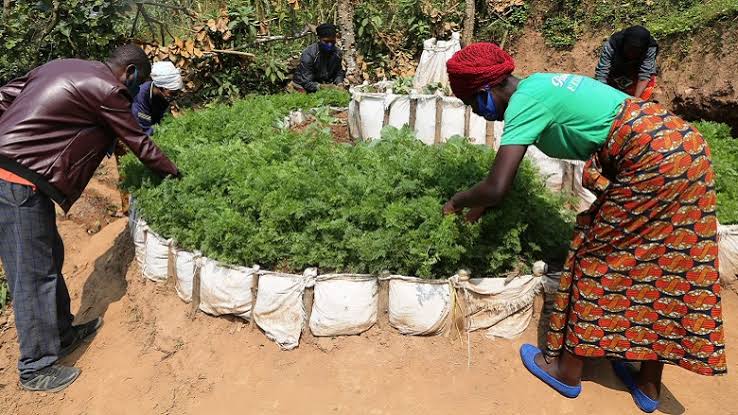
✍️ 𝘉𝘺 𝘑𝘢𝘯𝘢 𝘌𝘭𝘩𝘰𝘳𝘳, 𝘑𝘢𝘯𝘯𝘢 𝘛𝘦𝘯𝘻𝘪𝘯𝘨, 𝘔𝘢𝘤𝘢𝘳𝘦𝘯𝘢 𝘔𝘢𝘳𝘵𝘪𝘯 𝘚𝘦𝘨𝘶𝘳𝘢𝘥𝘰, 𝘕𝘪𝘤𝘰𝘭𝘦 𝘚𝘰𝘶𝘵𝘩𝘢𝘳𝘥; 𝘚𝘰𝘤𝘪𝘢𝘭 𝘋𝘦𝘷𝘦𝘭𝘰𝘱𝘮𝘦𝘯𝘵, 𝘞𝘰𝘳𝘭𝘥𝘉𝘢𝘯𝘬 𝘎𝘳𝘰𝘶𝘱.
Investments in climate resilience could add the equivalent of 150 million jobs in low-and middle-income countries by 2050. These investments encompass critical initiatives like upgrading infrastructure to withstand extreme weather, developing early warning systems, and restoring degraded lands through drought-resistant farming. Investing in climate resilience is not just good for the planet, it directly benefits job creation and unlocks economic growth. Here are five lessons that have emerged from the World Bank’s engagements with community leaders from across the globe.
1️⃣ Public-private partnerships unlock market access and keep value local
Community institutions can structure credible partnerships with the private sector to generate local growth. In Tugu Utara, a village-owned enterprise manages formal agreements with coffee buyers and eco-tourism operators, generating revenue that is redistributed through transparent profit-sharing and reinvested in landscape stewardship. In the Solomon Islands, the Rural Development Program’s agribusiness-farmer partnership increased product sales by 51% and raised farmer incomes by 56% among participating households. Strong community institutions reduce risk for private partners, aggregate local supply and demand, and keep economic gains anchored in the community rather than extracted from it.
2️⃣ Community-owned risk assessments are what connect climate finance to the right problems
Across every case examined, programs were most effective when communities identified and prioritized their own climate risks before any investment decisions were made. This helps ensure money reaches the right problems rather than the most visible ones. In Guinea, a structured participatory planning approach anchors development plans across 362 communes, giving local leaders a shared framework for turning climate risk into investment priorities. In Madagascar, embedding this same process into local governance structures helped 121 communes create integrated development plans, coordinate early warning systems, and channel livelihoods support—such as credit access, value chain development, and agricultural inputs—to more than 73,400 people. By aligning risk assessments with market opportunities, these investments diversified crops, raised household incomes, and created more resilient local jobs through stronger value chains and microenterprise growth. The transferable lesson: a minimum package of locally owned risk tools, explicitly linked to budgeting and investment selection, provides the foundation for more effective and context-appropriate action.
3️⃣ Performance-linked finance accelerates resilience
Knowing which communities face the greatest climate risks is only useful if that knowledge shapes how money flows. Indonesia has built a system that does exactly this. By classifying the climate vulnerability of all villages and linking risk tiers directly to Village Fund allocations and performance incentives, the government is using data to directly inform budgets. Kenya’s Financing Locally Led Climate Action program similarly offers performance-based grants to reward counties that meet spending, citizen engagement, and climate risk assessment targets. These investments increasingly translate into tangible jobs—such as in catchment restoration, resilient agriculture, and renewable energy—while also boosting household livelihoods by improving productivity, reducing climate losses, and opening new market opportunities, to date benefitting over 1.1 million people.
4️⃣ Local institutions are the most durable delivery systems for resilient livelihoods
While resilient infrastructure is critical, lasting climate adaptation grows out of strong local institutions, effective governance, and community trust that guide and sustain investments. In the Kyrgyz Republic, a village investment program built over more than a decade reached over one million people and helped thousands of women generate new income through beekeeping, fruit processing, and ecotourism enterprises. In Zambia’s Barotse Sub-basin, grants channeled through community structures enabled farmers to cultivate drought-resistant crops, invest in solar-powered water systems, and rehabilitate canals, with nearly all beneficiary households reporting new income sources as a result. When embedded in national systems, these locally led platforms deliver a genuine double dividend: climate resilience and greater economic opportunity.
5️⃣ Government-to-government learning turns good programs into scalable systems
One of the most underutilized assets in international development is the knowledge that governments accumulate from experience. Structured exchanges create the conditions for this knowledge to travel. Critically, these engagements build networks of officials who can turn shared insights into concrete policy and implementation commitments, and who create the enabling conditions to crowd in both public and private action around solutions with demonstrated traction. Sustaining this learning requires converting insights into training and technical tools, while deepening cross‑country collaboration on climate‑risk‑informed investment, anticipatory action, and performance‑linked financing. A single learning event is a starting point; the goal is a system.
Picture: Supplied