

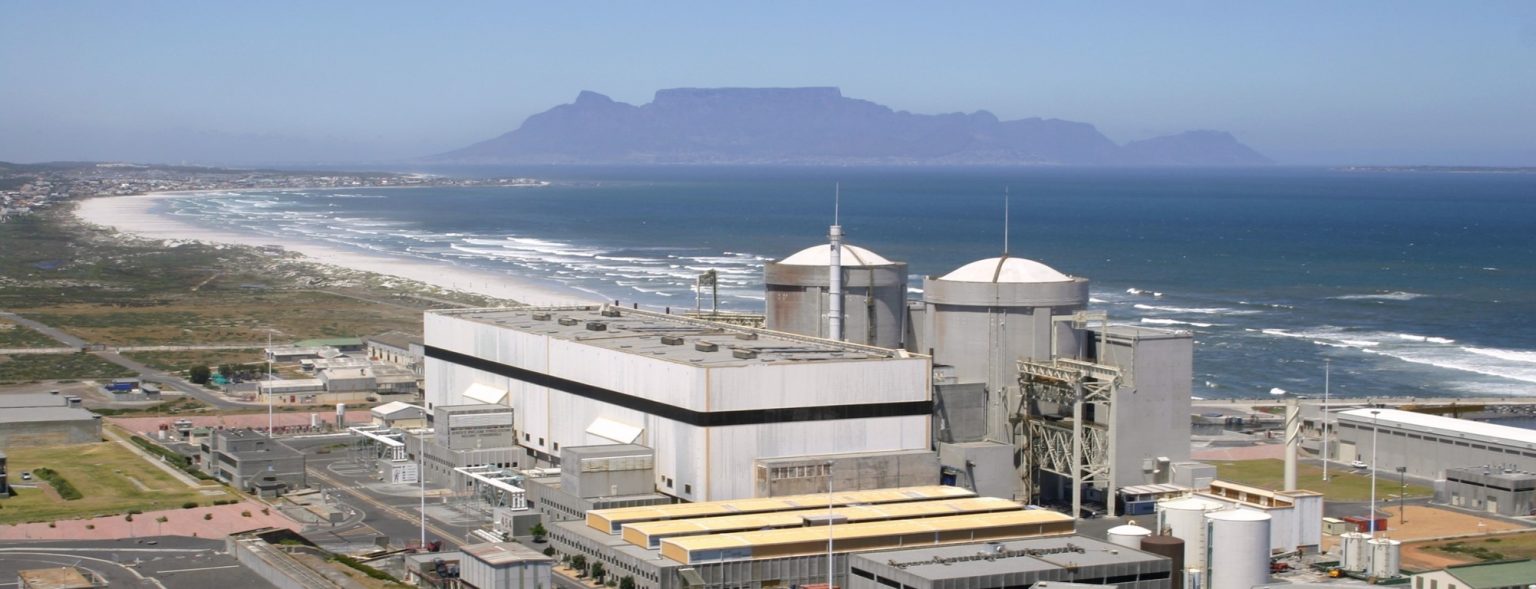
Eskom has reconnected Unit 1 at the Koeberg Nuclear Power Station to the national grid at 01:36 on 29 October 2025, returning about 930 Megawatts (MW) to the grid.
This follows the unit’s first major maintenance outage, since the installation of new steam generators
Loading the fuel began in early September 2025, followed by commissioning activities before the unit’s synchronisation.
This means both Koeberg Unit 1 and Unit 2 are currently online, supplying about 1,860MW to the national grid.
This is about 5% of Eskom’s total electricity output.
Bheki Nxumalo, Eskom’s Group Executive for Generation, said “to maintain grid stability, Koeberg’s maintenance outages are strategically staggered every 16 to 18 months, ensuring the two units are never offline at the same time. Unit 2 has been running at full capacity for 234 days at 99.88% year-to-date Energy Availability Factor and is awaiting the National Nuclear Regulator’s (NNR) decision on its 20-year Long-Term Operation licence on 9 November 2025.”
But some environmental groups, including the Southern African Faith Communities’ Environment Institute (SAFCEI) want South Africa to not rely on nuclear power and choose greener solutions only.
Through the “Resist false solutions” campaign, environmentalists aligned to SAFCEI, want Government to steer as far away as possible from fossil fuels.
Wiedaad Davids, Chairperson of West Coast Faith Solutions in Saldanha Bay, said in a recent hearing “as communities living near Koeberg, we are deeply concerned about government’s plan to extend the nuclear plant’s operating licence beyond its intended lifespan. At almost 40 years old, is Koeberg in a safe enough condition to do this? It is therefore critical that the public sees the evidence that this dangerous nuclear plant meets all safety requirements before any lifespan extension can even be considered. In my view, decisions that could have far-reaching impacts for our communities, are being made without considering the real dangers to ordinary South Africans.”
Some are advocating for nuclear power for low carbon emissions during operation, such as the International Atomic Energy Agency (IAEA). However, associated challenges are radioactive waste, high costs, and construction delays.