

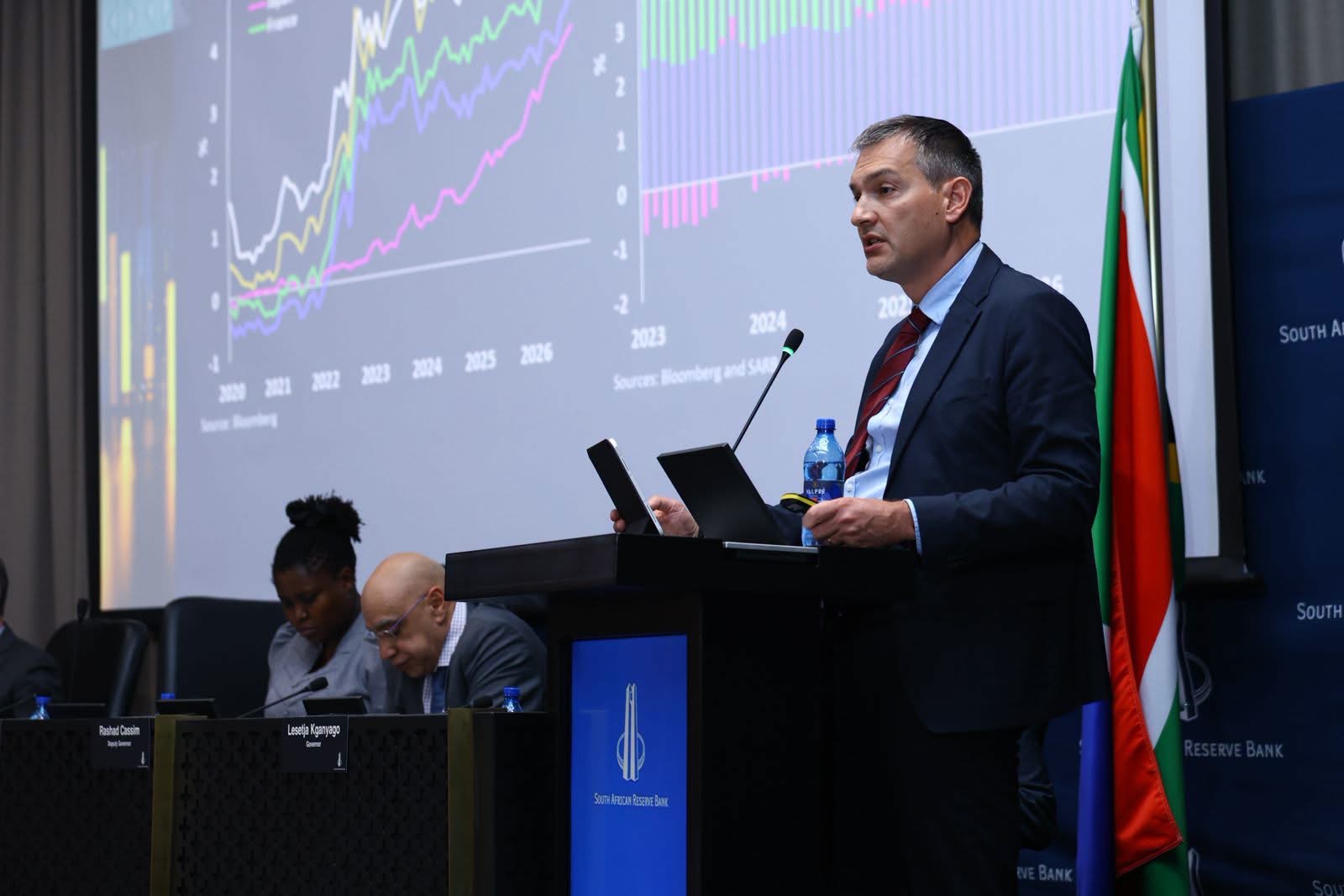
Global inflation is on the rise again, against resilient growth.
Dr Konstantin Makrelov, Chief Economist and head of research at the South African Reserve Bank (SARB), said South Africa’s growth is shaken, but not derailed.
Speaking at the 2nd monetary policy forum, on Tuesday, he said South Africa’s main shock has come largely from energy shocks.
He also said South Africa, should be able to reach an inflation target of 3% at the end of 2027.
But this could be hampered by risks of persistent conflict in the Middle East, as well as by Russia in Ukraine.
Another risk is that of an El Niño on food inflation.
Although food inflation is not bad, it is expected to pick up.
Increased oil prices, refinery margins and the ability to export refined products is constrained.
As a result, a shock could come from moving goods, which producers have carried, until now.
This could change where this cost could be pushed onto consumers.
Inflation expectations are starting to pick up in established economies, but financial conditions are tightening in emerging economies.
Makrelov pointed out that South Africa’s investment in GDP ratio is 14% far below other emerging countries. This is largely due to imports of machinery and equipment as well as fuel.
Lesetja Kganyago, the Governor of the SARB, said the organisation is well equipped to handle supply driven inflation.
“The SARB remains committed to deliver, on managing managing the situation. The environment is difficult, but our mission is to protect purchasing power and return inflation to 3%.”
Picture: Supplied