

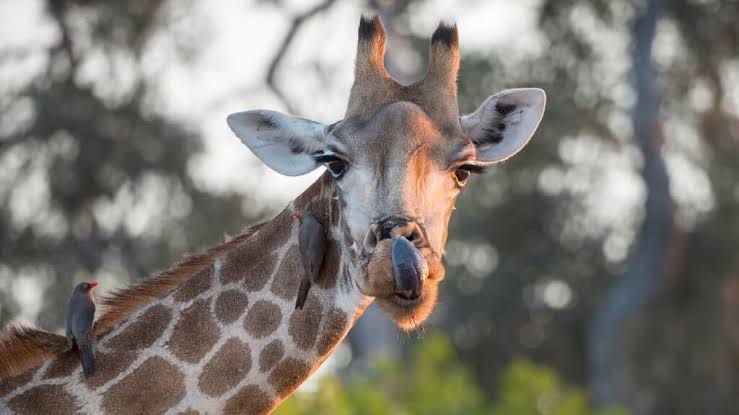
Researchers from the University of Cape Town (UCT) have proof giraffes aren’t all the same.
They analysed 3D scans of at least 515 giraffe skulls from various collections and genomic data. This revealed significant differences in cranial morphology and genetics among four species: the Northern, Southern, Reticulated and Masai giraffe.
Dr Nikolaos Kargopoulos, the study’s lead author and a postdoctoral fellow in the Department of Biological Sciences, said “when I embarked on this project, I did not expect to find such clear differences in the skull shapes of giraffe. Before I started looking closely, I thought a giraffe is just a giraffe.”
Dr Jesús Marugán-Lobón from the Universidad Autónoma de Madrid, said the study demonstrates that ossicone variation in each species is closely linked to the giraffe’s eye sockets, which tells scientists that ossicones and field of vision likely evolved together.
Scientists now believe that the four distinct giraffe species have clear implications for their conservation.
Dr Julian Fennessy, director of Conservation at the Giraffe Conservation Foundation and co-author of the study, said “it’s about time that the world stands tall for giraffes, in particular the International Union for Conservation of Nature (IUCN) and changes the outdated taxonomy of giraffe that some still hold on to.”
Fennessy also said conservation efforts need to urgently target all four giraffe species – in particular those with low numbers – before it is too late.
Giraffe (Giraffa spp.) populations have dipped by 30%, across 21 African countries, in just over three and a half decades.
Numbers dropped from 150 000 to 117 000 individuals.
The southern giraffe (Giraffa giraffa) has the largest known population in South Africa. A population assessment confirmed in 2019, that there are an estimated 21 053–26 919 individuals.
But researchers say, even these estimates were extrapolated from a small data set and lacked data from private properties in the Eastern and Western Cape, Free State and KwaZulu-Natal.
“Our database included records from all nine provinces, covering 86 public and 913 private lands, and resulted in an estimate of 29 536 (likely range = 21 744–39 859) southern giraffe in South Africa. Limpopo and the Eastern Cape reported the highest abundance. Kruger National Park hosted the largest public population with 12 412 (range = 10 345–14 554) southern giraffe. Private land, which previously was not sufficiently counted, accounted for 49.4% of the total estimate.”
Picture: Giraffe Conservation Foundation