

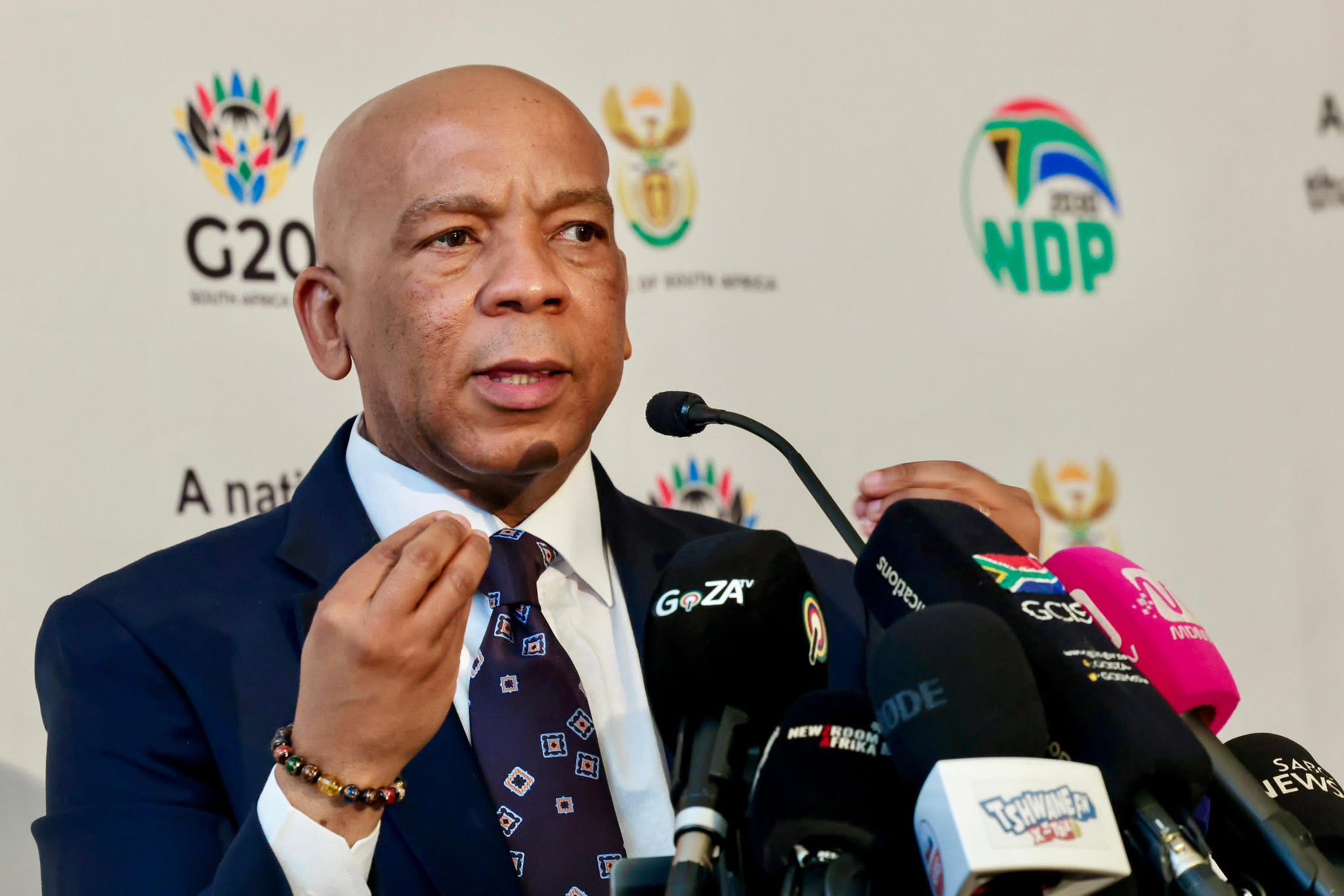
Government is planning to roll out electricity meters, as one of several interventions, to end load reduction.
Speaking at a media conference, Dr Kgosientsho Ramokgopa, the Minister of Electricity and Energy, said it will take between 12 to 18 months, to end load reduction, if these measures are unanimously accepted by all communities.
Meters are seen, as a way to “regularise” electricity, to sift the haves and have nots.
Ramokgopa said about 8.5million people, are affected by load reduction, in poor communities of Gauteng, Limpopo, Mpumalanga and KwaZulu-Natal.
Two million, hundred thousand (2.1 million) Eskom customers qualify for free basic electricity but only 485, 000 are actually getting this service.
Power utilities turn off the switch in these areas, when the network, is overloaded, during peak times (morning and evening).
But the Energy Available Factor, which hovered around 49% back in 2023, is now at over 70%.
The cost of electricity has increased by 934% from 1997 to 2024, compared to inflation that went up by over 155%, during the same period.
This, Ramokgopa said, is eroding the disposable income of many households.
“It is important to ensure that those who qualify for free basic electricity are susbisidised correctly, and as a result, the Department of Electricity and Energy, will review the Free Basic Electricity Framework (FBE)” he said.
The policy currently allows for 50 kWh of free basic electricity per month.
“We know that an average low-income household consumes about 200 kilowatt hours of electricity per month. If we talk about 100% subsidisation of the poor, it means that the 50kWh per month of free basic electricity should be shifted to 200 kilowatt hours per month. We are going to change the framework without relying on the fiscal envelope, so we don’t have to approach the Minister of Finance for more funds” added the Minister.
It also emerged there is a total of 771 transformer failures, due to illegal connections.
Picture: Supplied