

Dr Kgosientsho Ramokgopa, the Minister of Electricity and Energy in the Presidency, said the power system remains stable, supported by adequate emergency reserves that are strategically deployed, when necessary to manage periods of high demand.
Ramokgopa also said the system has remained resilient through recent cold fronts.
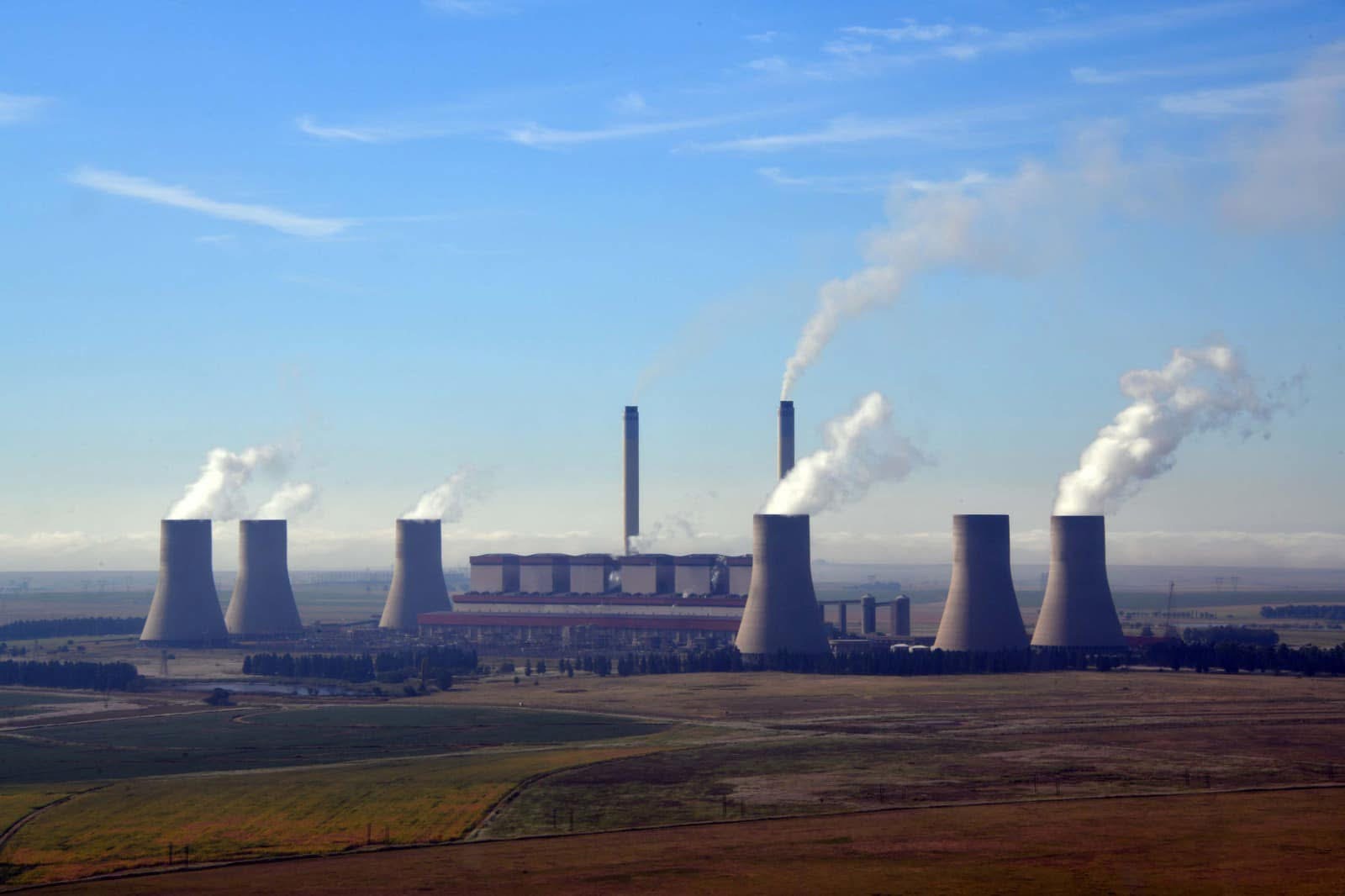
Tabling his budget speech, on Friday, the 11th July 2025, Ramokgopa said six poor performing plants — Tutuka, Majuba, Kusile, Kendal, Matla and Duvha — were prioritised for capacity recovery over a two-year period.
Thus far, 4955 Megawatts (MW) were recovered from the targeted 6,000 MW.
He also said over 14,000 kilometres of new lines will be developed by 2032, as part of the Transmission Development Plan.
The Minister also announced a R1.2 billion investment in the Multi-Purpose Research Reactor at Pelindaba, which is set to expand the nuclear fuel cycle research, isotope production, advanced materials development and high-precision manufacturing.
In July 2024, the National Nuclear Regulator granted a 20-year licence extension for Koeberg Unit 1, with Unit 2 expected to follow this year.
Leading to the budget vote, on July 10, 2025, the Minister took top-achieving Grade 11 and 12 students excelling in Science, Technology, Engineering, and Mathematics to Koeberg and the Pelindaba nuclear research centre.
Learners were selected from various schools to participate in a learning excursion focused on public education about nuclear energy.
Responding to a looming gas shortage, Ramokgopa said the Department is looking at new sources of gas supply, to expand import capacity and enable infrastructure development across the gas value chain.
“As part of its immediate response, the Department has initiated work to secure new Liquefied Natural Gas (LNG) supply contracts. It is also supporting the development of import terminals and regasification infrastructure at Richards Bay, in collaboration with relevant sector departments.”
But civil society groups such as the Southern African Faith Communities’ Environment Institute (SAFCEI), the Centre for Environmental Rights (CER), the Green Connection and other public interest organisations, have expressed concern over gas-to-power projects in the draft Integrated Resource Plan (IRP).
They warn that the IRP2023’s proposed addition of up to 19GW of gas capacity may risk locking the country into long-term fossil fuel dependency, while potentially driving up energy costs, and worsening inequality.
The Green Connection’s Liz McDaid said “there appears to be a growing influence of large industrial gas users – facing a looming “gas cliff” as pipeline supplies from Mozambique run dry – in shaping electricity planning. This is at the heart of our concern. These companies appear to be driving government efforts to secure new gas infrastructure to sustain their businesses/industry, when it should be supporting electricity generation for the public good.”
The organisations say because the IRP is the plan for energy for the future, public input is not just necessary but essential.
“The IRP should reflect what is in the public’s best interest – not what suits a handful of powerful stakeholders. We demand transparent modelling, full public participation, and a plan that delivers affordable, climate-safe energy to all South Africans” said Makaula.
“Not only is there a possibility of increased electricity prices, but more gas may worsen the climate crisis, in addition to potentially delaying people’s access to affordable power, especially for poor and rural communities. Who exactly benefits here? Because it does not appear to be the people who are struggling to keep the lights on or those who are having to deal with the direct impacts of climate change.”
Picture: Supplied