

This article was written by the Turtle Survival Alliance.
This ministerial decision by Madagascar’s Ministry of the Environment and Sustainable Development (MEDD) was formally announced on February 5, 2026, during a national ceremony at the Carlton Hotel in Antananarivo.
The 42,760 hectares area preserves one of the last remaining large blocks of spiny forest in southern Madagascar, an ecosystem of global importance with exceptionally high rates of endemism.
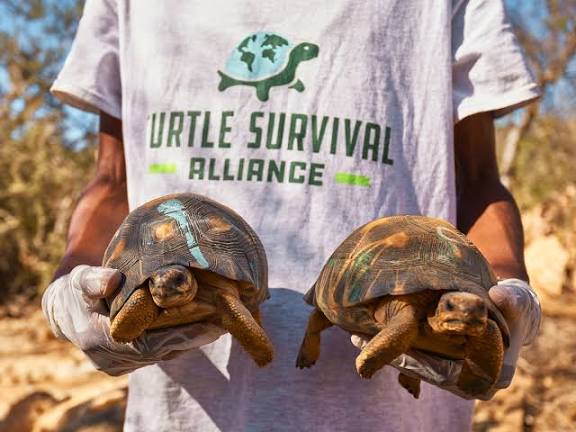
It provides critical habitat for endangered species, including Radiated (Astrochelys radiata) and Spider (Pyxis arachnoides) tortoises, as well as several native lemur species.
Managing this area sparks hope, expanding the potential to release thousands more tortoises in our care into a safe, protected habitat, where local communities will play a central role in long-term protection.
Hery Razafimamonjiraibe, Country Director, Turtle Survival Alliance Madagascar, said “these animals’ journey from victims of illegal trade from our country to ambassadors for conservation highlights the importance of protecting species at every stage—from enforcement to rehabilitation to rewilding. As we prepare these tortoises for their next chapter, we remain focused on creating sustainable solutions for species recovery and combating the root causes of wildlife trafficking.”
Acknowledgments:
This achievement was made possible through the generous support and collaboration of the Arthur L. and Elaine V. Johnson Foundation, the FITRAOFA Ala Hirike Mandrare Consortium, the Fondation pour les Aires Protégées et la Biodiversité de Madagascar (FAPBM), the Global Environment Facility, the Hempel Foundation, and The Mohamed bin Zayed Species Conservation Fund.
Picture: Supplied