

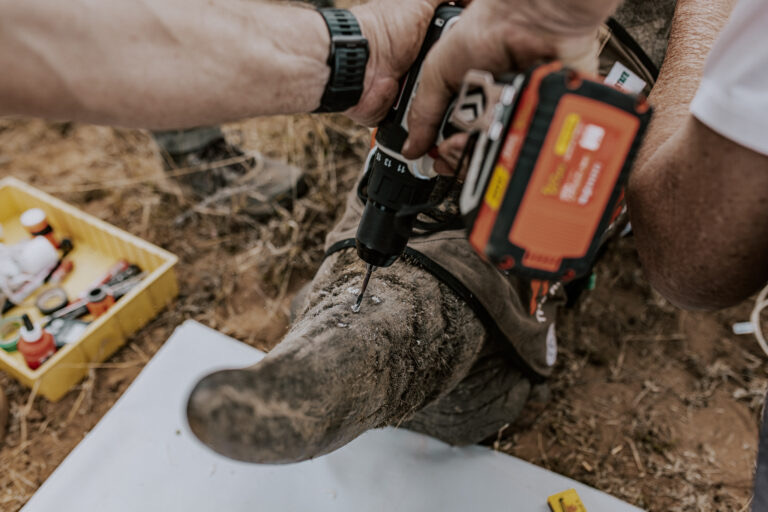
Six months ago, low levels of radioactive material, were placed into the horns of 20 rhinos in the Unesco Waterberg Biosphere.
Using a technique known as biological dosimetry, researchers cultured blood samples and examined the formation of micronuclei in white blood cells — a proven indicator of cellular damage.
No damage was found in the 20 rhinos during the pilot phase.
Results of blood samples of the animals, as well as veterinary inspections, confirmed that the animals are unharmed by the radioisotope levels used.
The Rhisotope Project, initiated six years ago, is the work of researchers from the University of the Witwatersrand in Johannesburg (Wits) and the International Atomic Energy Agency (IAEA).
It was launched to fight high levels of poaching. The International Union for Conservation of Nature (IUCN) has classified White Rhino as “Near Threatened” and Black Rhino as “Critically Endangered.”
Rafael Mariano Grossi, IAEA Director General, said “this project exemplifies how nuclear science can be applied in novel ways to address global challenges. By leveraging existing nuclear security infrastructure, we can help protect one of the world’s most iconic and endangered species.”
Through this initiative, rhinos will effectively be protected through nuclear technology, at country borders around the world.
Professor James Larkin, Chief Scientific Officer of the Project, based at Wits, said “we have demonstrated, beyond scientific doubt, that the process is completely safe for the animal and effective in making the horn detectable through international customs nuclear security systems.”
Picture: The Rhisotope Project