

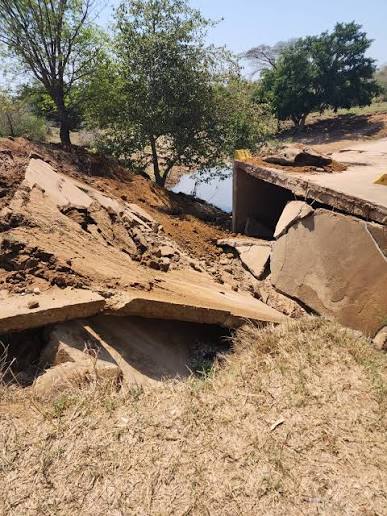
Mamanyoha Dagma, Mayor of Greater Letaba Municipality met with residents of several communities cut off by the collapse of a bridge, during this week.
Dagma met residents from Mamakata, Rabothata, Maraka, and Makhurupetji villages on Wednesday.
The purpose of the meeting was to provide an update on progress of the bridge.
Turns out the Municipality won’t be able to reconstruct damaged or new ones due to budget constraints.
“Following asessments conducted by the Municipal Task Team, it was determined that the construction of the Rampenyane Bridge is the most feasible and affordable option. This bridge will significantly improve access for surrounding communities” said the Municipality.
The Mayor also said requests for intervention regarding the Mokwasele and Rabothata bridges have been escalated to the Provincial Government and the South African National Defence Force (SANDF).
In Maraka village, a pedestrian bridge is planned for the next financial year.
In the interim, a temporary structure will be provided to ensure that learners can safely access schools.
Community members welcomed the engagement and requested to be involved during the construction phase, noting that their local knowledge would assist in identifying the most suitable locations.
Ernest Rachoene, Limpopo’s MEC for Public Works, Roads and Infrastructure, was part of discussions at the National Transport Summit, this week.
Discussions there, focussed on the role played by roads in economic growth, regional integration and service delivery.
Key themes at the Summit were sustainability, innovative funding models, improved maintenance strategies and the adoption of alternative materials to build resilient and future-ready road networks.
Rachoene wrote “for Limpopo Province, which is currently facing devastating floods that continue to damage critical road infrastructure, the outcomes of this conference could not be more timely. The insights shared point to a future where road networks are designed and maintained with greater resilience against extreme weather conditions.”
This, he said points to stronger drainage systems, climate-smart materials, and proactive maintenance approaches that can reduce the impact of disasters and ensure quicker recovery.
“As the province works to restore connectivity in affected areas, these discussions provide a clear roadmap for rebuilding better — not just restoring roads, but upgrading them to withstand future challenges, safeguard communities, and protect economic activity” he said.
Motlhanke Phukuntsi, Chairman of the RAL board of the RAL Board of Directors, Moses Tseli and the CEO -Makhitha Chesane, were part of the delegation from Limpopo.
Picture: Supplied