

Renewable power capacity reached around 5149 gigawatts (GW) in 2025.
This is after the addition of 692 GW, or a 15.5% of annual increase, according to new report by the International Renewable Energy Agency (IRENA).
Renewable energy also dominated the total capacity expansion at 85.6% share, while non-renewables continue to account for a smaller share of additions.
Francesco La Camera, IRENA Director-General, said “in the midst of uncertain times, renewable energy remains consistent and steadfast in its expansion. This not only indicates market preference but also makes a strong case for renewable energy resilience with brutal clarity.”
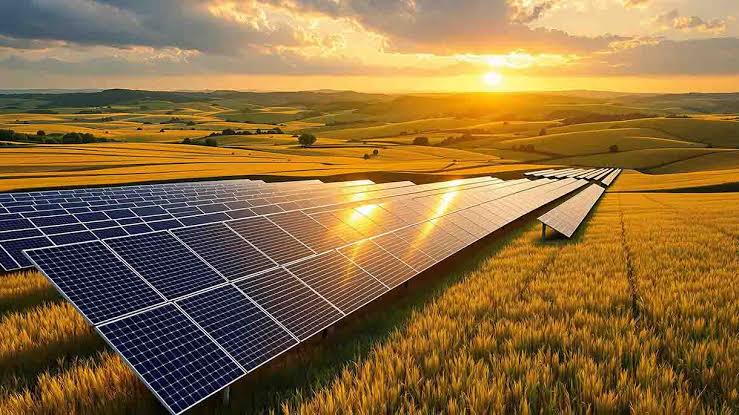
Solar energy led the increase, last year, accounting for 511 GW or an estimated 75% share in the total renewables capacity addition.
Wind energy followed suit, adding 159 GW.
Together, solar and wind accounted for 96.8% of all net renewable additions last year, reflecting the biggest cost decrease among all renewable technologies.
Bioenergy took the third place with 2.3% annual growth, adding 3.4 GW to total renewable energy expansion.
The report also confirmed, the persistent and significant disparities amongst countries and regions.
Asia continued to lead with a 74.2% contribution to all new renewable capacity; the 513.3 GW additions represent a growth rate of 21.6%.
Africa recorded its highest capacity increase, rising by 15.9% or adding 11.3 GW, driven by Ethiopia, South Africa, and Egypt.
Another region that experienced its largest annual growth is the Middle East, which increased by 28.9%, led by Saudi Arabia.
In terms of total global capacity, Asia unsurprisingly keeps its top position with 2 891 GW of total renewables capacity, followed by Europe which recorded 934 GW in total.
Central America and the Caribbean had the lowest renewables capacity with a total of 21 GW in 2025.
Picture: GB Solar