

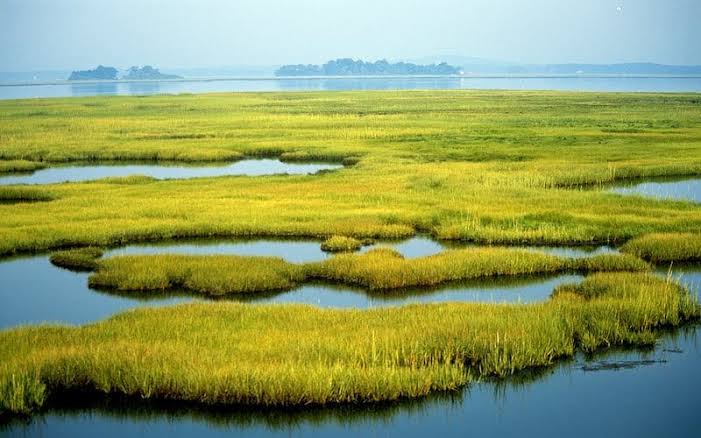
Urgent action to protect wetlands is necessary, as one fifth of the world’s remaining wetlands could vanish by 2050.
This is according to a new report, titled “the Global Wetland Outlook 2025: Valuing, conserving, restoring and financing wetlands (GWO 2025)” published on the 15th of July 2025, by the Convention on Wetlands.
The estimated cost of that loss is around USD$39 trillion, considering benefits that support people, economies and nature.
The report will be launched in the lead-up to the 15th Meeting of the Conference of the Contracting Parties to the Convention on Wetlands (COP15), at the Victoria Falls, in Zimbabwe, from 23 to 31 July 2025.
Dr Musonda Mumba, Secretary General of the Convention on Wetlands, said “wetlands bankroll the planet, yet we are still investing more in their destruction than in their recovery. The world is sitting on a $10 trillion opportunity—restoring wetlands could unlock these benefits, but we’re running out of time.”
The report also found that 22% of wetlands were lost since 1970, an equivalent of more than half a billion football pitches.
One in four of the world’s remaining wetlands, are already in poor ecological condition, and degradation is widespread across the world, with the steepest recent declines in Latin America, the Caribbean, and Africa.
Mumba said wetlands are not a marginal issue. They are fundamental to the water cycle our planet depends on, for our global response to climate change, and are essential for the well- being of billions of people and protecting species under imminent threat of extinction.
Dr Hugh Robertson, Chair of the Scientific and Technical Review Panel (STRP) of the Convention on Wetlands and lead author of the report, said the report features a wide selection of case studies that demonstrate progress is possible—and prevention is cheaper than restoration, which can cost anywhere from $1,000 to $70,000 per hectare, depending on the ecosystem.
“In Zambia’s Kafue Flats, an initial restoration project costing just $300,000, helped reactivate seasonal flooding and control invasive species. Today, more than $1 million per year is invested in protecting biodiversity, water systems, and livelihoods for 1.3 million people — including artisanal fisheries valued at $30 million annually. It’s a costly fix, but far cheaper than losing those services entirely.”
But the first step to recovery, is to integrate wetland value in decision-making, treating wetlands as essential infrastructure in land-use, water, and economic planning.