

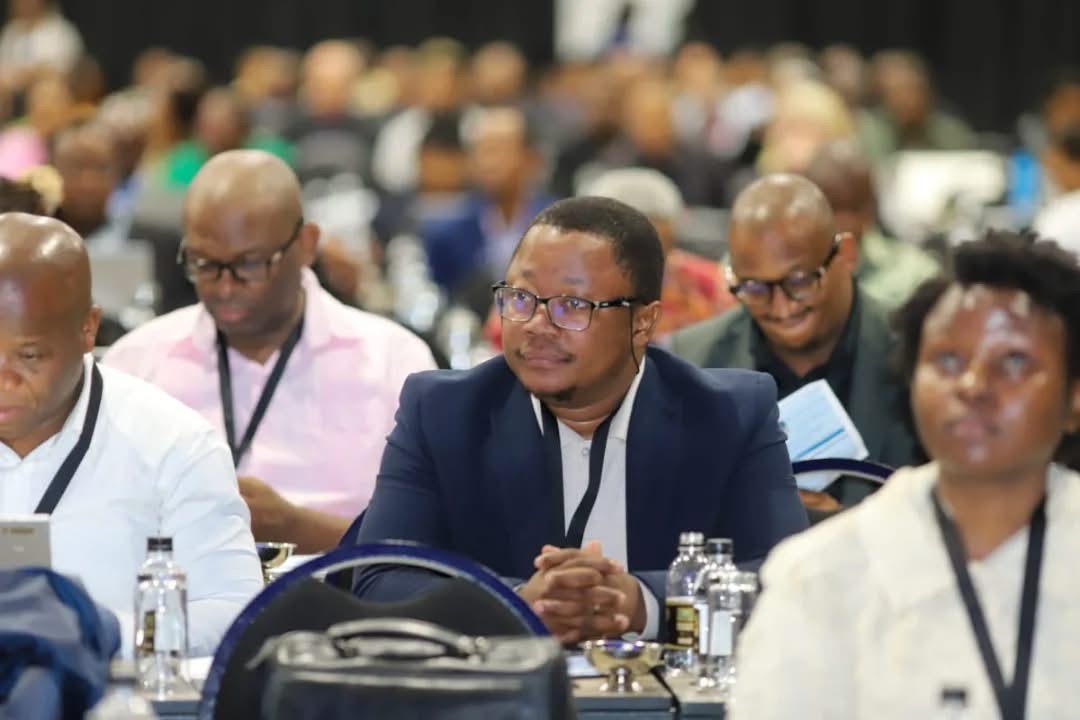
GreenPeace Africa wants people to sign a pledge, to acknowledge and act against the state of our water.
The pledge wants action against rivers, lakes and oceans, reportedly choking with pollution.
“A staggering 4.3 billion litres of untreated or partially treated sewage, is released into the country’s rivers daily. More than half of the country’s municipalities (57%) do not notify water users when they discover that the water has been contaminated” according to GreenPeace.
Similarly, WaterCAN said civil society was not invited to this week’s Water Indaba.
Dr Ferrial Adam, WaterCAN’s Executive Manager, said “we cannot fix South Africa’s water crisis while continuing to make the same political mistakes. If civil society remains locked out, government is sabotaging its own solutions.”
Adams also said “from sewage spills in Kliprivier to the neglect of rural water systems and failing municipal infrastructure, the signs are clear: South Africa’s water system is on the brink. Yet those working on the frontlines—testing water, reporting leaks, cleaning rivers—are excluded from the very spaces meant to fix the crisis.”
Speaking at this week’s Water Indaba, President Ramaphosa, acknowledged challenges facing long-term water infrastructure build projects, and said committed investments ranging in billions, will undoubtedly mitigate current supply challenges.
“We are keenly aware that security of supply is by no means our only challenge” said Ramaphosa.
The President also said there is a need for an urgent and high-level national turnaround plan on water security that is aligned to the Government of National Unity’s Medium-Term Development Plan 2025 to 2029.
Among reforms introduced, is the establishment of a National Water Resource Infrastructure Agency, whose function will be to bring strategic alignment, consistency and accountability to various institutional arrangements for water stewardship.
Another, is the launch of the Water Sector Anti-Corruption Forum, in collaboration with the Special Investigating Unit (SIU) and other partners.
Professor Puleng LenkaBula, Principal and Vice-Chancellor (VC) at the University of a South Africa, spoke about what to do about concerns, policy systems that govern and protect our water sources.
David Mahlobo, Deputy Minister of Water and Sanitation, agreed that water and sanitation issues require serious attention.
Mahlobo said, “urban migration placed major duress on the ailing water infrastructure, with increased demand heightening the water crisis.”
Sandile Ncgobo, South African Local Government Association, said water and waste water treatment plants were unable to keep up with demand.
He said in addition, research points to unregulated emerging contaminants, including Pharmaceutical waste, landfill, leaches, domestic effluents, and industrial waste water, as well as waste from personal care products.
Picture: GCIS