

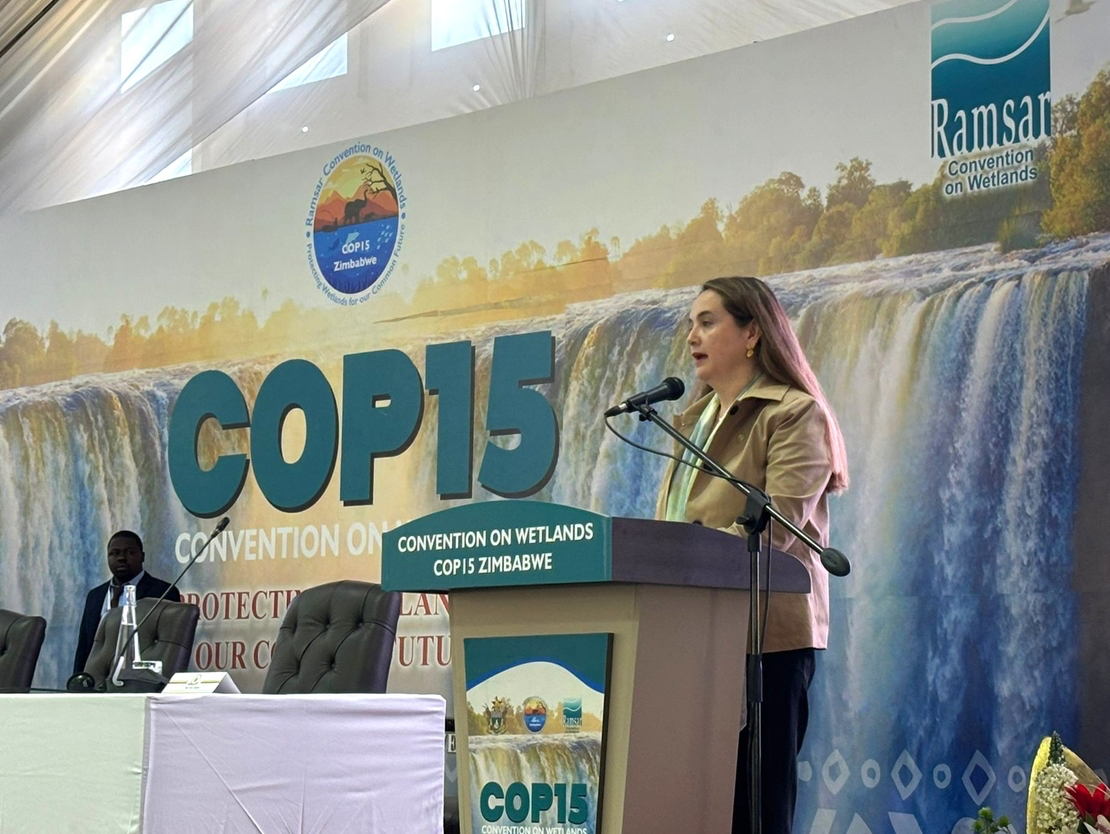
The Ramsar Convention on Wetlands COP15 in Victoria Falls, Zimbabwe, drew to a close on Sunday, following the meeting by contracting parties, titled “Protecting Wetlands for our Common Future.”
Repeated calls were made at the conference to step up efforts to protect wetlands, now at a loss of about 22%, with an annual decline of 0,52%.
Another report launched at the COP15, makes the case for the inclusion of animal driven ecological processes in wetland restoration and management.
Grethel Aguilar, Director General (DG) of the International Union for the Conservation of Nature (IUCN) said in her closing remarks, the collaboration across Multilateral Environmental Agreements (MEAs), sectors and stakeholders emerged as a clear priority.
“By working together, we can amplify the impact of our efforts, mobilise the finance and innovation needed for restoration, and ensure wetlands are recognised for the nature-based solutions they offer.”
She also said wetlands are the lifeblood of our planet, sustaining biodiversity, protecting communities from floods and droughts, storing carbon, and securing livelihoods for millions around the world.
“Protecting them requires us to stay connected too, building bridges so that we can create a future where people and nature thrive together.”
Zimbabwe announced its target to restore 250,000 hectares of degraded wetlands by 2030, and the establishment of 5 new Ramsay sites (wetlands if global importance).